Home / Business and Economy / Migrant Artisans Stitch Global Fashion from Indian Village
Migrant Artisans Stitch Global Fashion from Indian Village
23 Dec, 2025
Summary
- Migrant artisans transformed Sunet into a global embroidery hub.
- Over 250 workshops thrive with traditional hand-embroidery techniques.
- The village is a cost-effective source for high-quality Punjabi suits.
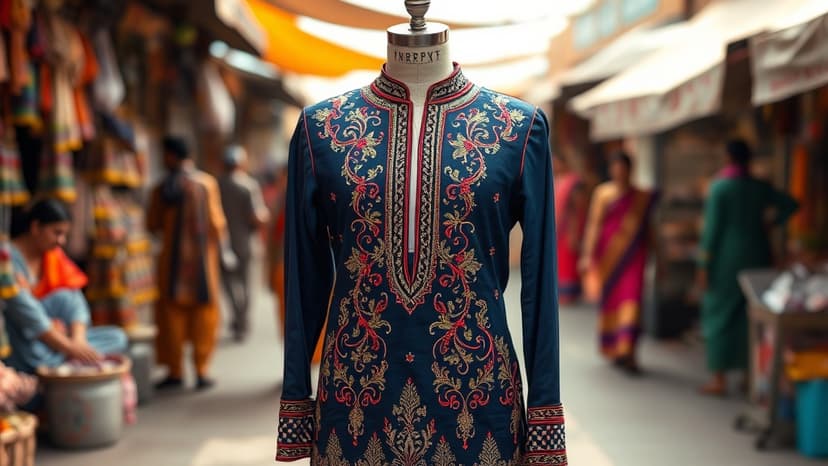
Sunet, a historic village in Ludhiana, has undergone a remarkable economic and cultural transformation driven by migrant artisans. Beginning in the mid-1990s, skilled workers from Uttar Pradesh and West Bengal sought better livelihoods, gradually establishing over 250 embroidery workshops. Today, these artisans, many of whom have permanently settled after decades of work, are responsible for the village's burgeoning reputation in hand embroidery.
The artisans in Sunet consciously reject automation, preserving the intricate 'soul' of their craft through traditional techniques such as 'Resham and Tilla', 'Zari and Dabka', and 'Sippi Sitara'. Their meticulous work adorns Punjabi suits, bridal lehngas, and sacred cloths, meeting a global demand for high-quality, handcrafted garments. The village has become a vital center for these artisanal skills, attracting customers seeking superior craftsmanship at reasonable prices.
This demographic shift has infused Sunet with a new cultural vibrancy, filling the void left by native residents who have relocated. The continuous work available in Sunet provides economic stability that is often absent in artisans' hometowns. Consequently, Sunet is now intricately woven into the global fashion trade, a testament to the economic power of migrant skill.


