Home / Business and Economy / India Joins US Race to Curb China's Mineral Grip
India Joins US Race to Curb China's Mineral Grip
8 Feb
Summary
- US invites India to Pax Silica initiative to challenge China's critical mineral dominance.
- Initiative aims to diversify supply chains for minerals vital to AI, EVs, and green energy.
- India's rare-earth reserves are significant, but technology and capital remain hurdles.
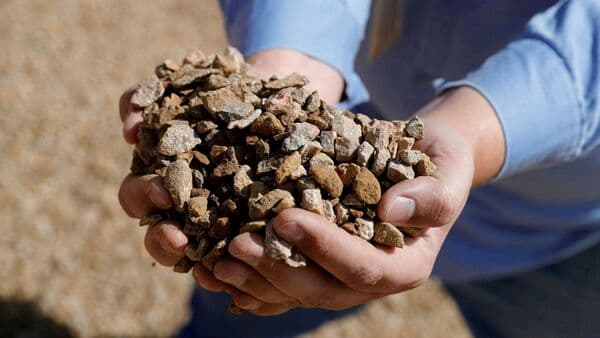
The United States is actively seeking India's participation in the Pax Silica initiative, a global collaboration designed to disrupt China's control over critical mineral supply chains. Launched in December 2025 by the US, the initiative aims to foster international cooperation in mining, processing, and technology for essential minerals like lithium and rare-earth elements, which are vital for artificial intelligence, electric vehicles, and green energy technologies.
Currently, nine nations, including Australia, Japan, and South Korea, are official signatories, with several others as partners. China's significant market share, controlling around 90% of global rare-earth processing and a substantial portion of lithium-ion battery production, has prompted this diversification effort. Recent Chinese export restrictions on rare-earth magnets have underscored the vulnerability of global supply chains to single-country dependence.
While India holds substantial rare-earth reserves, its capacity for mining and refining has been limited by technological and financial constraints. The Indian government launched the National Critical Minerals Mission (NCMM) with a ₹34,300 crore budget to bolster its position in the supply chain. Short-term competition for China is unlikely, but collaborative models, potentially involving Quad nations, are being explored, with India serving as a manufacturing hub.
Future success hinges on international agreements for critical minerals. The US and its allies seek access to raw materials and manufacturing capabilities, while India requires technological and financial support. Experts suggest that rather than directly competing, Western nations should focus on innovation, recovery, and recycling to circumvent China's dominance.