

Home / Business and Economy / Ducati: Handcrafted Luxury Faces Global Headwinds
Ducati: Handcrafted Luxury Faces Global Headwinds
5 Apr
Summary
- Ducati maintains handcraftsmanship despite AI and robotics.
- Global conflicts and US tariffs create significant economic challenges.
- Ducati's CEO views the company as an 'entertainment company made by engineers'.
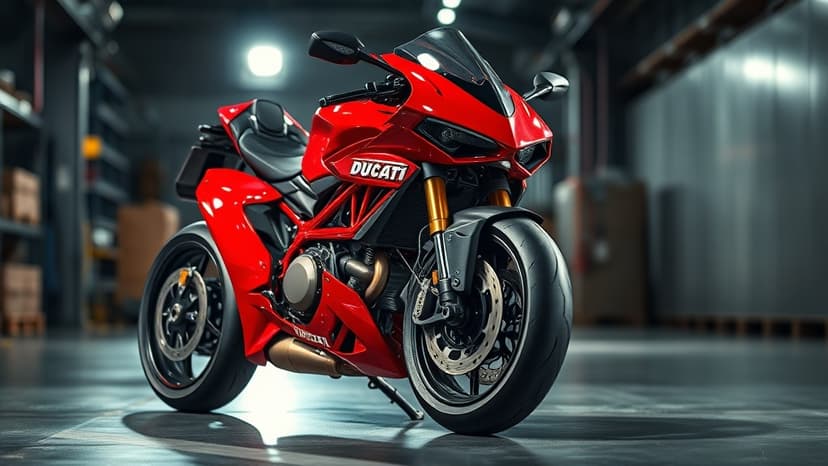
Ducati's headquarters in Borgo Panigale, Italy, stands as a testament to meticulous handcraftsmanship, where each motorcycle is built with exceptional attention to detail, a stark contrast to the prevailing age of AI and robotics. The company, affectionately known as 'la rossa' for its signature bright red bikes, is celebrated for its engineering prowess, racing heritage, and iconic Italian style.
Claudio Domenicali, the CEO since 2013, highlights the enjoyment of testing prototypes and receiving thanks from fans. However, Ducati's 100th birthday celebrations occur during a difficult economic period. The ongoing Iran war has caused oil prices to soar and stock markets to tumble, impacting sales of luxury goods like high-end motorcycles, with prices starting at £9,495.
Further pressures include pre-existing US tariffs and unfavorable currency exchange rates, which contributed to operating profits falling to €52 million in 2025 from €91 million the previous year. Domenicali describes these challenges as 'headwinds' and a significant problem beyond just motorcycle sales, particularly noting the impact of President Trump's tariffs on the US, Ducati's largest market.
Despite these hurdles, Ducati, owned by Audi since 2012, is considered well-positioned due to its premium market standing and Audi's understanding of its brand values. The UK is recognized as a very important market, appreciating its long motorcycle culture and passion. Prominent British figures like David Beckham and Prince William are fans, and historically, riders like Carl Fogarty and Mike 'the Bike' Hailwood have achieved significant success.
Ducati also identifies women as a missed opportunity, with only 10% of riders currently being female. Another challenge is the aging demographic in its key markets; the average age of a UK client is 57, compared to a global average of 48. Younger generations in cities often prefer public transport and digital engagement over motorcycling.
The company draws strength from its roots in Italy's Motor Valley, alongside brands like Ferrari and Lamborghini, emphasizing a fusion of design, technology, art, and engineering with a modern, AI-inspired spirit. Ducati aims to be the best in its specialized field, even implementing minor engineering adjustments, like a 4mm change to a pivot point on the Panigale V4, to significantly enhance handling.
Regarding electrification, battery weight remains a significant obstacle, with Domenicali estimating at least ten to fifteen years before suitable battery technology is available. Ducati's history began with radio components before transitioning to motorbikes in the late 1940s, starting with the 'Cucciolo' engine for bicycles. Today, it produces extreme models like the limited-edition £135,000 Superleggera V4 Centenario.
Ducati's success in MotoGP, the motorcycle racing equivalent of Formula 1, is crucial for brand building, even if the 'win on Sunday, sell on Monday' adage isn't strictly true. The company is excited about the potential for increased MotoGP popularity, similar to Formula 1's growth, and sees itself as an 'entertainment company—made by engineers.'
