Home / Business and Economy / Critical Minerals: The New Geopolitical Battleground
Critical Minerals: The New Geopolitical Battleground
29 Jan
Summary
- Critical minerals are central to energy security and geopolitical power.
- China dominates rare earth processing, a key trade lever.
- India balances domestic strength with global partnerships for minerals.
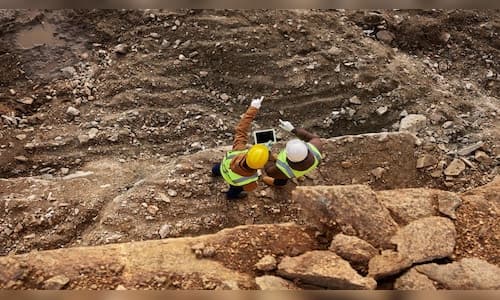
The 2026 Economic Survey reveals that control over critical minerals, including lithium, cobalt, and rare earths, is becoming a decisive factor in the global energy transition, influencing energy security and geopolitical power.
Source countries are increasingly implementing trade restrictions on critical mineral exports, impacting the pace and cost of the low-carbon transition. China holds a near-monopoly on rare earth processing and a significant share in refining other key minerals, which it has leveraged in trade disputes.
Copper's price volatility is noted, driven by supply concerns and surging demand from the power sector and data centers. The material intensity of renewable energy technologies, such as wind turbines and solar panels, underscores the immense need for these minerals.
Advanced economies are developing standards-based markets focused on sustainability and traceability to mitigate supply risks. The US, for instance, is actively building alternative supply chains through international agreements and domestic investments to reduce reliance on China.
Developing economies face challenges with high compliance costs and the risk of being confined to lower-value segments of supply chains. India is adopting a balanced strategy, strengthening its National Critical Mineral Mission and engaging in global collaborations to secure its mineral supply chains.
The Union Cabinet has approved the NCMM with substantial financial outlay and an incentive scheme for critical mineral recycling to enhance value chain resilience across exploration, mining, processing, and recycling.