Home / Business and Economy / South Korea & Japan Automate to Counter China's Shipbuilding Might
South Korea & Japan Automate to Counter China's Shipbuilding Might
4 Oct
Summary
- Asian nations automate shipyards to combat labor shortages.
- Robots boost welding output, potentially reducing delivery times.
- China's shipbuilding dominance spurs technological race.
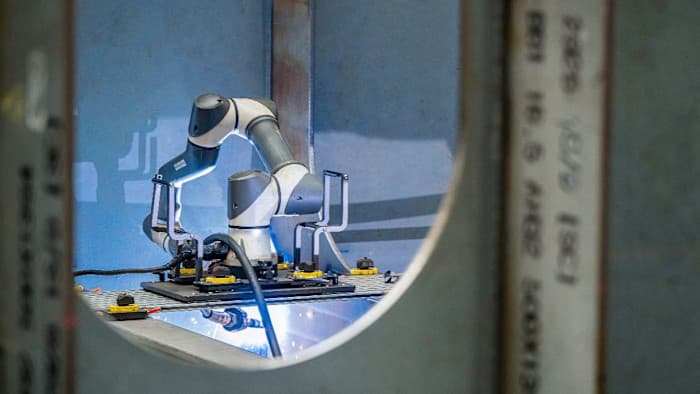
South Korea and Japan are accelerating their adoption of robots in shipbuilding yards to counter China's significant industry dominance. This strategic shift towards 'smart shipyards' is driven by deepening labor shortages, extensive order backlogs, and intense competition from lower-cost Chinese rivals that secured a majority of global orders last year.
These nations are vital for reducing global reliance on China for commercial and naval vessels. While they possess critical technological expertise, some experts suggest Chinese yards are more aggressively developing and deploying automation, particularly welding robots. This technological race is essential for their future competitiveness.
Robots offer consistent quality and increased output, potentially accelerating vessel delivery. Companies like Fanuc are tailoring machines specifically for shipbuilders, aiming for widespread automation. While challenges in automating complex designs and hazardous environments remain, the goal is to create 'dark factories' reliant on AI and automation by 2030.
The investment in smart yards is substantial, with some aiming to automate a significant portion of production. This automation push is also intended to bolster US shipbuilding capabilities through increased Seoul-Washington cooperation. However, full automation faces hurdles due to the complex nature of shipbuilding requiring human dexterity.
While South Korea and Japan are seen as potentially having a slight lead in robotic adoption, China's rapid progress and extensive government support allow it to absorb risks and costs effectively. This dynamic creates an urgent need for automation in Asian shipyards to compete, though careful consideration of investment costs versus benefits is advised.


