Home / Business and Economy / Southeast Asia's Coal Addiction Fuels Climate Crisis
Southeast Asia's Coal Addiction Fuels Climate Crisis
22 Jan
Summary
- Southeast Asia's coal demand outpaces global growth, endangering climate goals.
- Indonesia and Vietnam's $15.5 billion green transition deals face coal challenges.
- Rising coal use in Asia is driven by cost and energy security concerns.

Southeast Asia is experiencing the world's most rapid increase in coal demand, jeopardizing efforts to curb carbon emissions. This surge is projected to continue at over 4% annually through 2030, fueled by economic expansion and growing electricity needs across the region. Indonesia and Vietnam are at the forefront of this trend, accounting for a substantial portion of the projected rise.
These developments cast doubt on the $15.5 billion Just Energy Transition Partnerships (JETP) signed by Indonesia and Vietnam in 2022. The agreements aim to fund renewable energy transitions, but the persistent reliance on coal, driven by cost and energy security concerns, presents a significant obstacle.
Coal remains a critical energy source for Southeast Asia, supplying over a third of its electricity. While global coal demand is expected to plateau, the region is moving in the opposite direction. This is partly due to a public and governmental preference for "phase-down" over immediate "phase-out" of fossil fuels, prioritizing energy security and economic stability.
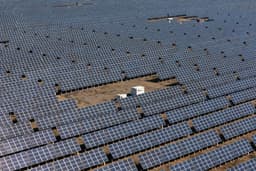
Vietnam has made strides in solar energy, significantly increasing its capacity. However, challenges persist with its power grid struggling to manage the rapid integration of renewables and requiring substantial investment for upgrades. In Indonesia, efforts to transition away from coal have faced setbacks, with updated climate pledges rated as "critically insufficient" by Climate Action Tracker.
The momentum for JETP-backed projects faces uncertainty, with expectations for the deals potentially set too high given the complexities of energy transitions. The ongoing reliance on coal by major economies like Indonesia, the world's largest coal exporter, poses a critical question for other developing nations considering their energy futures.