Home / Business and Economy / AI Threat Drives Young Brits to Ancient Crafts
AI Threat Drives Young Brits to Ancient Crafts
27 Aug
Summary
- Young workers seek AI-proof heritage crafts like bookbinding.
- Manual trades offer satisfaction and escape from digital monotony.
- Demand for handcrafted items increases from premium publishers.
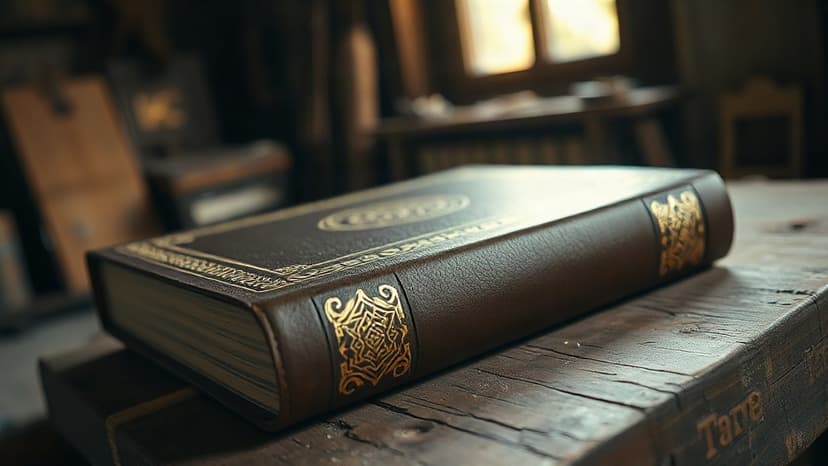
Young workers, facing a disrupted job market where AI increasingly impacts white-collar professions, are turning towards heritage crafts. Trades like bookbinding, metalwork, and boatbuilding, which demand specialist knowledge, dexterity, and creative judgment, are gaining traction. These hands-on skills are perceived as inherently resistant to automation.
Individuals like Eryn Lawley, a politics graduate, are transitioning to apprenticeships in fields like bookbinding, valuing the material and meditative aspects of the work. This resurgence offers a lifeline to shrinking industries, with publishers such as the Folio Society actively rejecting generative AI in favor of supporting human craftsmanship.
Companies like Cox London, specializing in artistic metalwork, have seen a surge in apprenticeship applications, indicating a strong desire among young people to work with physical materials. Similarly, the National Theatre in London is experiencing high demand for technical apprenticeships in dying crafts, aiming to bridge skill gaps and cultivate new talent.
While AI may serve as a tool to assist, the unique value and satisfaction derived from skilled manual and handcrafted work remain irreplaceable. The increasing demand for uniquely crafted items, even amidst numerous AI-generated applications for such roles, highlights the enduring appeal of human artistry and skill.


