

Home / Business and Economy / Africa's Lights Flicker On: Millions Gain Power
Africa's Lights Flicker On: Millions Gain Power
2 Apr
Summary
- Expanded energy access significantly improves livelihoods and daily life.
- New financing aims to accelerate electrification across sub-Saharan Africa.
- Initiatives like Mission 300 target 300 million people by 2030.
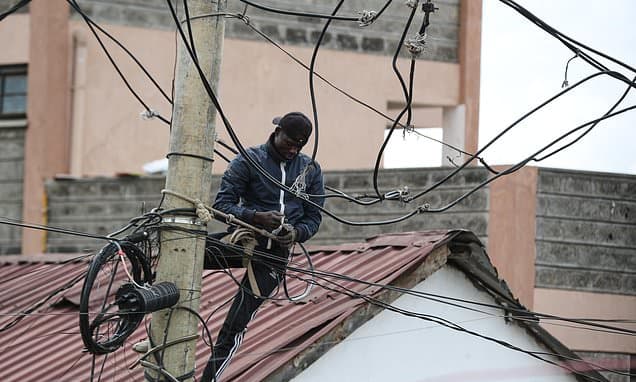
Access to electricity is revolutionizing communities across Africa. In Kenya, Agnes Mbesa now operates her shop after dark, while in western Kenya, Samuel Oketch uses a new freezer to store his fish, thanks to recent electrification. These personal transformations highlight the broader impact of energy expansion.
Significant new funding is being directed towards accelerating this progress. The European Investment Bank pledged over $1.15 billion for renewable energy projects, and the Rockefeller Foundation committed an additional $10 million to electrification programs. These investments support initiatives like the World Bank and African Development Bank's Mission 300.
Mission 300 aims to provide electricity to 300 million people in sub-Saharan Africa by 2030, utilizing grid expansion and decentralized solutions like mini-grids and solar. This approach is crucial in areas where national grids are unreliable. Countries like Malawi and Liberia are receiving technical assistance for their energy plans.
Kenya's own Last Mile Connectivity Project, funded since 2017, has been instrumental in increasing rural access, which rose to about 68% in 2023. Programs across eastern and southern Africa also aim to expand access in up to 20 countries over the next seven years, demonstrating a sustained commitment to energy development.
