
Home / Business and Economy / Commissioners Approve Mega Data Center Amid Chaos
Commissioners Approve Mega Data Center Amid Chaos
5 May
Summary
- Box Elder County commissioners approved a 40,000-acre data center campus.
- The decision was made amidst public outcry and rowdy interruptions.
- The project involves a 9-gigawatt natural gas plant for self-sustainability.
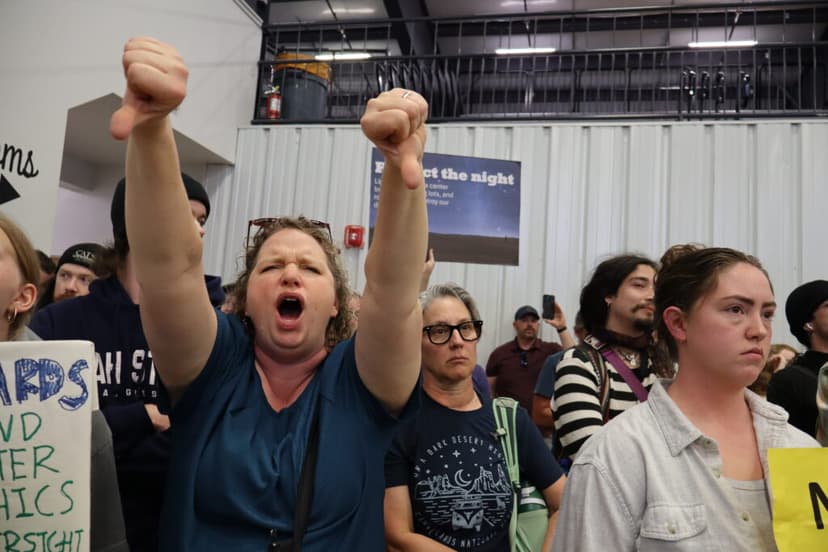
Box Elder County commissioners have unanimously approved resolutions supporting a colossal 40,000-acre data center campus. The decision came after significant public dissent, with hundreds of community members gathering to protest the Stratos Project.
Proceedings became chaotic, forcing commissioners to move to a private room to cast their vote away from the public. Despite the uproar, the commissioners proceeded, citing state law requirements for the Military Installation Development Authority (MIDA) to advance the project. MIDA needs local consent for the data center, planned on private land lacking zoning regulations.
Lee Perry, a commissioner, stated that the vote is merely the beginning of a long, phased development process subject to continuous oversight and regulatory reviews. Developers estimate the project will cost over $1 billion, with the first phase commencing in the coming months.
The Stratos Project, backed by celebrity investor Kevin O'Leary, plans to house its own natural gas power plant generating 9 gigawatts. This capacity exceeds double the annual energy consumption of Utah. Developers assure that this isolated power generation will not impact public utility rates.
Cooling for the data center equipment will utilize a closed-loop system, employing privately owned water rights deemed unsuitable for consumption or agriculture. However, the public remains wary, particularly due to the absence of a finalized environmental impact study.
Residents expressed frustration over the perceived haste of the approval process, highlighting concerns about the potential environmental and resource impacts of such a significant development in northern Utah. The commissioners have mandated certain protections, including county representation on a project board and standards for dark skies, noise, and public safety.
