
Home / Business and Economy / Singapore Faces Tough Choices on Public Spending Amid Changing Times
Singapore Faces Tough Choices on Public Spending Amid Changing Times
27 Sep, 2025
Summary
- Singapore must be judicious in public spending, acknowledging trade-offs
- Government has difficult task of balancing public finances and raising taxes
- Calls to do more for various groups, but resources are finite
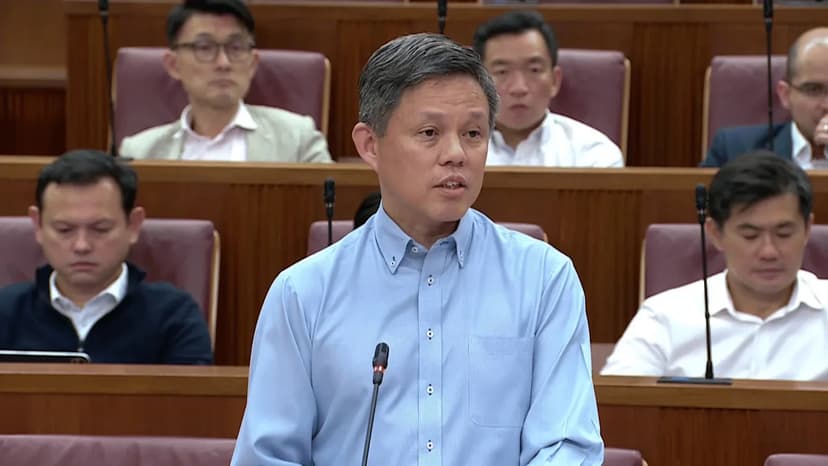
On September 26, 2025, Singapore's Coordinating Minister for Public Services Chan Chun Sing addressed the nation's Parliament, emphasizing the need for the government to be judicious in how it spends public funds. He acknowledged that the government faces a difficult task in balancing public finances, as MPs have raised many good ideas that will ultimately require resources.
Minister Chan stressed that "everything we want to do more of means something less for either current or future needs." He noted that the government must be honest with the public about these trade-offs and make difficult political decisions, such as raising taxes, to ensure revenues keep up with spending needs.
The minister also called for a collective effort to secure Singapore's place in a changing world. He urged Singaporeans to contribute by understanding the global landscape, creating new value propositions, maintaining social cohesion, and upholding the country's principles. Chan emphasized that Singapore must continue to evolve from a government-centric to a people-centric approach, where the public service partners with citizens to write the next chapter of the nation's story.
Addressing the issue of finite resources, Chan said that while calls to do more for various groups are valid, Singaporeans must reach a consensus on who to help more. He acknowledged that "not all of us will get the same" and that some may need to moderate their expectations to ensure others receive the help they need.
As Singapore looks to the future, Minister Chan stressed the importance of breaking the intergenerational transfer of disadvantage and continuing to invest in programs that support the country's most vulnerable populations.
