feedzop-word-mark-logo
searchLogin
Feedzop
homeFor YouUnited StatesUnited States
You
bookmarksYour BookmarkshashtagYour Topics
Trending
Terms of UsePrivacy PolicyAboutJobsPartner With Us

© 2026 Advergame Technologies Pvt. Ltd. ("ATPL"). Gamezop ® & Quizzop ® are registered trademarks of ATPL.

Gamezop is a plug-and-play gaming platform that any app or website can integrate to bring casual gaming for its users. Gamezop also operates Quizzop, a quizzing platform, that digital products can add as a trivia section.

Over 5,000 products from more than 70 countries have integrated Gamezop and Quizzop. These include Amazon, Samsung Internet, Snap, Tata Play, AccuWeather, Paytm, Gulf News, and Branch.

Games and trivia increase user engagement significantly within all kinds of apps and websites, besides opening a new stream of advertising revenue. Gamezop and Quizzop take 30 minutes to integrate and can be used for free: both by the products integrating them and end users

Increase ad revenue and engagement on your app / website with games, quizzes, astrology, and cricket content. Visit: business.gamezop.com

Property Code: 5571

Home / Arts and Entertainment / Witch Hats: From Ancient Power to Elphaba

Witch Hats: From Ancient Power to Elphaba

20 Nov, 2025

•

Summary

  • Conical headwear dates back to Bronze Age priests.
  • Chinese mummies wore tapered hats, called Subeshi Witches.
  • Witch hats are iconic in literature and film.
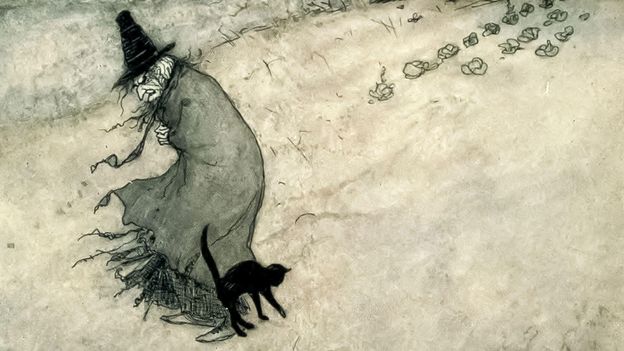
Witch Hats: From Ancient Power to Elphaba

The enduring image of the witch often includes the distinctive conical hat, a symbol with roots stretching back to antiquity. Ancient Bronze Age priests wore majestic, gold, tapered headpieces adorned with astronomical symbols, signifying their connection to divine power and knowledge. Further evidence of this ancient headwear was discovered with Chinese mummies from the 4th to 2nd Centuries BC.

These mummies, unearthed in 1978, sported pointy hats, leading to their modern moniker, 'The Witches of Subeshi'. This historical association highlights that the conical hat's symbolism predates its common depiction in folklore and popular culture.

From these ancient origins, the conical hat has evolved into a powerful visual trope, famously featured in iconic works. Its presence in Frank L. Baum's 'The Wicked Witch of the West', the 1939 film 'The Wizard of Oz', the 'Harry Potter' series, and Cynthia Erivo's portrayal of Elphaba in 'Wicked' solidifies its status as an enduring symbol of witchcraft.

trending

Agent shoots criminal illegal alien

trending

Kane carries Bayern to victory

trending

Mets sign Luis Garcia

trending

Lewandowski scores 15th season

trending

Hummels on Bayern Munich move

trending

Slavia Prague warns Barcelona

trending

Tommy Rees joins Falcons

trending

Cody Bellinger to Yankees

trending

Marseille vs Liverpool Champions League

Disclaimer: This story has been auto-aggregated and auto-summarised by a computer program. This story has not been edited or created by the Feedzop team.
The oldest known conical headwear includes majestic, gold, tapered pieces from the Bronze Age.
The Witches of Subeshi were Chinese mummies from the 4th-2nd Centuries BC found wearing conical hats.
The broomstick was first linked to sorcery in 1342 with an accusation against Lady Alice Kyteler.

Read more news on

Arts and Entertainmentside-arrowHarry Potterside-arrowElphabaside-arrowThe Wizard of Ozside-arrow

You may also like

Spall on Wormtail's Evil Vulnerability

13 Dec, 2025 • 169 reads

article image

Wicked's Final Chapter: Elphaba & Glinda's Story Unfolds

28 Nov, 2025 • 282 reads

article image

Director Reveals Why Dorothy's Face Was Hidden

28 Nov, 2025 • 324 reads

article image

Wicked Witch: Actresses Who Defined the Icon

22 Nov, 2025 • 317 reads

article image

Wicked Song Placement Shifts Glinda's Arc

23 Nov, 2025 • 280 reads

article image