Home / Arts and Entertainment / Whitney Houston's Super Bowl Anthem Controversy Explained
Whitney Houston's Super Bowl Anthem Controversy Explained
4 Feb
Summary
- Houston's Super Bowl anthem had a live stadium and prerecorded broadcast version.
- The recorded version addressed concerns about stadium noise.
- Proceeds from the released single benefited the American Red Cross.
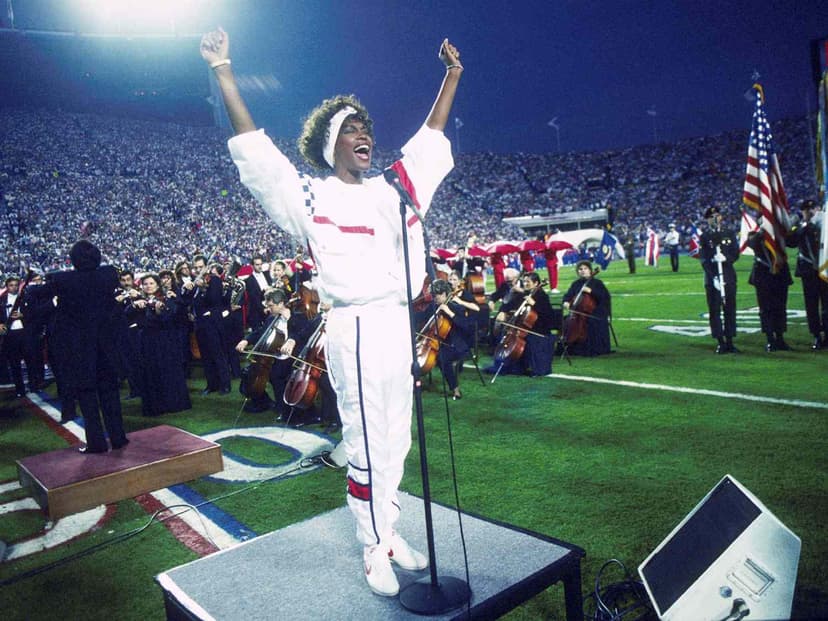
Whitney Houston's unforgettable rendition of the "Star-Spangled Banner" at Super Bowl XXV on January 27, 1991, occurred during a pivotal moment for the United States, just 10 days after the Persian Gulf War began.
The performance, delivered by the then 27-year-old Grammy winner at Tampa Stadium, created a stir. While attendees heard Houston's live vocals, viewers at home experienced a pre-recorded version. This was a strategic choice made by her team to mitigate concerns about the ambient noise within the open-air venue.
Initially, the nation was in an uproar upon realizing the discrepancy between the live and broadcast performances. However, Houston and her record label, Arista Records, capitalized on the public's reaction.
Requests for copies of the recording led to its official release. Within weeks, sales of the single, available on various formats, generated over $500,000 for the American Red Cross Gulf Crisis Fund. This release quickly became the fastest-selling single in Arista Records' history.
Reflecting on the event months later, Houston shared her perspective, believing Americans needed a sense of national unity. She recalled seeing the hopes, prayers, and fears of the country reflected in the faces of the stadium audience. Her Super Bowl performance is still widely regarded as one of the most memorable moments of her career.