Home / Arts and Entertainment / Governess's Dark Secrets Unfold in Gothic Thriller
Governess's Dark Secrets Unfold in Gothic Thriller
17 Nov
Summary
- The film adaptation of "Victorian Psycho" significantly alters the novel's ending.
- Maika Monroe's portrayal of Winifred Notty surprised even the author.
- The movie premiered to a five-minute standing ovation at Cannes.
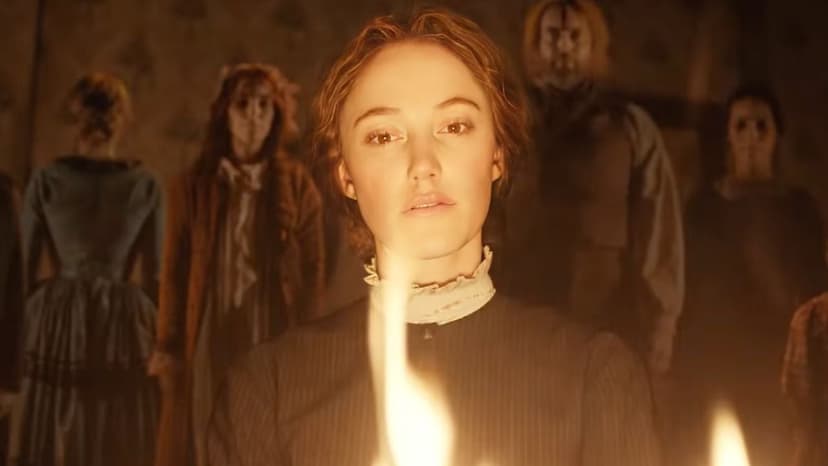
The gothic thriller "Victorian Psycho," directed by Wigon and written by Feito, arrived in theaters on November 13th. Set in 1858, the film centers on Winifred Notty, a governess at the eerie Ensor House, where mysterious disappearances create a sinister atmosphere.
Adapting her own novel, Feito embraced a distinct creative perspective, collaborating closely with Wigon. She emphasized that translating the story to screen allowed for natural evolution, acknowledging that some elements would be lost while others would be gained, distinct from the original manuscript.
Significant changes were made, including a different ending, a risky but ultimately effective choice for the film's visual style. This alteration positions the movie as a unique work separate from its source novel. The film debuted at the Cannes Film Festival in the Un Certain Regard section, receiving a substantial five-minute standing ovation.
"Victorian Psycho" has garnered positive critical reception, evidenced by its Certified Fresh status on Rotten Tomatoes. Maika Monroe's performance as Winifred Notty offered unexpected nuances, bringing a tenderness to the character that intensified the impact of her anger, surprising even the author.
Feito described the journey from manuscript to screen as unusual, with the adaptation commencing before the novel's publication. She and Wigon developed the project through extensive collaboration, with Wigon possessing an immediate vision for the film. Screenwriting's collaborative nature contrasted with the solitary act of novel writing, presenting unique challenges in translating internal monologues and graphic violence.
Key elements retained include Winifred's core personality and the overall tone, while childhood flashbacks were omitted to maintain narrative momentum. The decision to alter the ending was influenced by time and budget constraints but ultimately served the film's elegant visual language, diverging from the novel's more graphic conclusion.
Inspiration for Winifred Notty drew from various literary characters and real-life figures. Feito felt greater empathy for the screenplay's version of Winifred, who seemed to struggle more to fit in. Monroe's casting was met with excitement, and her interpretation, particularly her vocal delivery and facial expressions, brought an unexpected and captivating dimension to the character.
The film adeptly balances dark comedy, horror, and social satire, with specific scenes serving as pillars for these tonal shifts. The visual design, including the use of Dunsany Castle as Ensor House, significantly shaped the story, highlighting the family's contemporary aspirations within the gothic setting.
Feito, also an executive producer, found relief in relinquishing some control to the talented film crew, while remaining actively involved on set. Witnessing the post-production process, from editing to music and effects, was an exciting culmination of collaborative effort. The film's reception at Cannes and among horror fans has been overwhelmingly positive and welcoming.


