Home / Arts and Entertainment / Nemrut's Decapitated Deities: Exploring the Enigmatic Ruins of an Ancient Kingdom
Nemrut's Decapitated Deities: Exploring the Enigmatic Ruins of an Ancient Kingdom
12 Nov, 2025
Summary
- Colossal stone heads of deities atop Mount Nemrut in Turkey
- Tomb of King Antiochus I, who ruled the ancient Kingdom of Commagene
- Statues blending Greek, Persian, and Armenian traditions
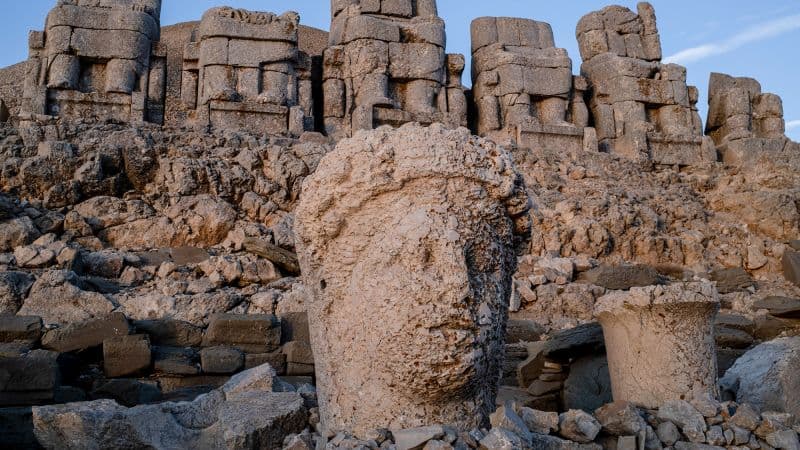
In the eastern Taurus mountains of Turkey, Mount Nemrut rises over 2,000 meters, its slopes dotted with the decapitated stone heads of ancient deities. This is the legacy of King Antiochus I, who ruled the Kingdom of Commagene over 2,000 years ago.
Antiochus, seeking immortality, constructed a grand sanctuary on the mountain's summit, where he placed colossal statues representing a unique blend of Greek, Persian, and Armenian traditions. These figures, once towering over 15 meters tall, now lie scattered and cracked, a haunting reminder of the king's ambition.
The mystery of Antiochus's hidden tomb, believed to lie within the 50-meter-high tumulus atop Nemrut, has baffled archaeologists for over a century. Despite numerous excavation attempts, the chamber's contents remain undiscovered, preserved by the site's careful protection.
Today, Mount Nemrut is a national park, its fragile statues stabilized and restored for visitors. Tourists flock to witness the dramatic vistas and the ancient kingdom's profound heritage, captivated by the enduring legacy of King Antiochus I and his enigmatic mountain sanctuary.


