Home / Arts and Entertainment / Sun Xun's 'Magic Atlas': A Dreamlike Visual Feast
Sun Xun's 'Magic Atlas': A Dreamlike Visual Feast
3 Nov
Summary
- Film made over a decade with diverse materials and techniques.
- Explores a fascist coal empire through an orphan boy's eyes.
- Visuals prioritize mood and texture over a linear narrative.
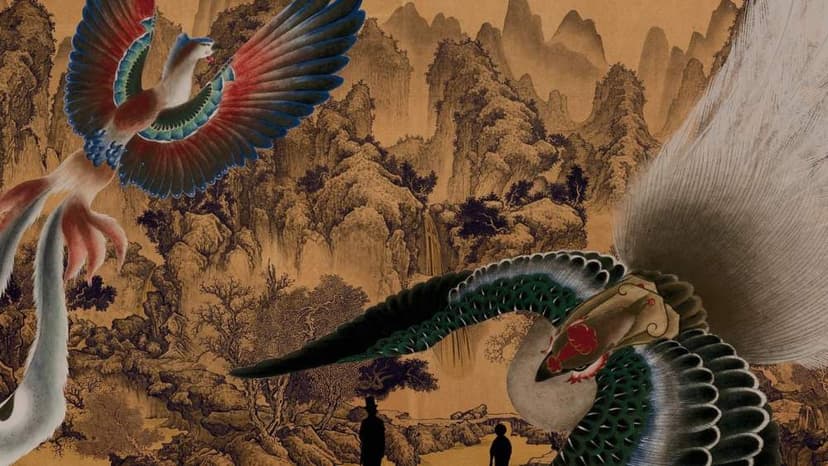
Sun Xun's animated film "Magic Atlas," a decade-spanning project, champions tactile artistry against the backdrop of AI concerns. Produced by Pi Animation Studio in Singapore, the film masterfully employs diverse materials, from ink on paper to woodcut, to craft its surreal visuals. It loosely explores a fascist coal empire through the perspective of an orphan, Xiao Zhi, who learns secrets from an imprisoned magician.
The narrative of "Magic Atlas" takes a backseat to its evocative imagery and fragmented, atmospheric storytelling. The film opens with Buddhist scriptures and transitions through various artistic styles, featuring painted creatures, surreal hybrid animals, and homages to artists like Pieter Bruegel. Its visual language often centers on heavy, inky blacks and white outlines, starkly contrasting with vibrant explosions of color.
The film delves into themes of authoritarianism and the suppression of truth, exemplified by scenes of scheming politicians and oppressive factory lines. Concepts like a mass surveillance system of giant mosquitoes highlight its blend of folklore and science fiction. A sequence inspired by the isolation of the Covid-19 pandemic, created through international collaboration, underscores the film's commentary on art and pacification.
While "Magic Atlas" can be challenging to connect with emotionally due to its fragmented and metaphysical nature, its technical brilliance is undeniable. Sun Xun intentionally prioritizes artistic expression over universal comprehension, resulting in a film that frequently approaches the divine through its unique visual and thematic explorations.


