Home / Arts and Entertainment / Franco Era: Girls Defied Dictatorship to Play Soccer
Franco Era: Girls Defied Dictatorship to Play Soccer
9 Mar
Summary
- Film 'Another League' depicts women's soccer pioneers in 1970s Spain.
- Girls faced social and political opposition to play the sport.
- The story highlights the long fight for women's rights.
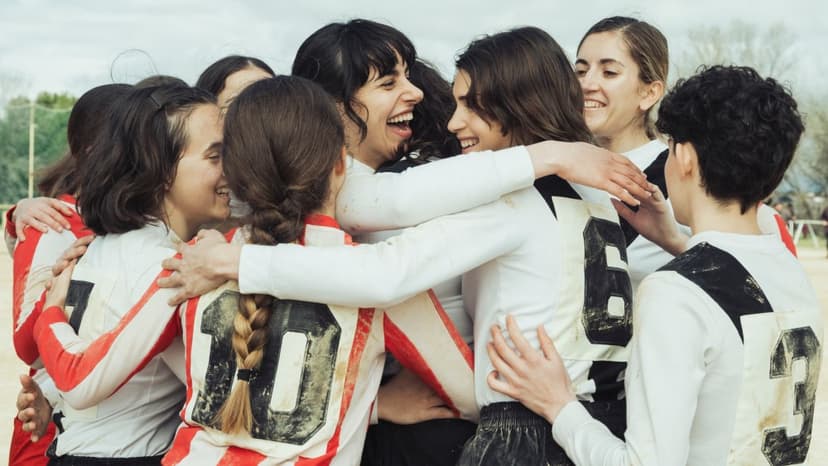
The film 'Another League,' directed by Marta Díaz de Lope Díaz, chronicles the remarkable birth of women's soccer in early 1970s Spain during the waning years of the Franco dictatorship. The fact-based movie follows a group of young girls and an ambitious promoter who united to create a national women's league, confronting immense social and political resistance. This era was characterized by strict societal expectations for women, including the regime's institutions dictating their roles.
Díaz and co-writer Zebina Guerra were inspired by the true story of these pioneers, seeing it as a tribute to the long struggle for women's rights. The director drew personal connections, recalling her own childhood experiences playing soccer and facing similar societal judgments. The film emphasizes the historical context, highlighting how courageous these women were against the repressive regime.
Despite its historical setting, 'Another League' resonates with contemporary relevance, serving as a reminder of the fights for rights that are enjoyed today. The script, while based on true events and inspired by figures like Rafael Muga, fictionalizes some aspects to capture the emotional truth of the pioneers' experiences. The film's visual identity successfully transports viewers to the early 1970s while maintaining a relevant feel.
The film's journey to screen involved a rigorous casting process to find actresses with a passion for football, supported by a talented crew that recreated the authentic 1970s aesthetic. International sales are handled by Filmax, which anticipates 'Another League' will be a crowd-pleaser, celebrating those who paved the way with their passion and courage, especially in light of Spain's current status as world champions in women's soccer.