Home / Arts and Entertainment / De Jong: Crafting Worlds from Dust to Digital Dreams
De Jong: Crafting Worlds from Dust to Digital Dreams
13 Nov
Summary
- Production designer Ruth De Jong brings director visions to life authentically.
- She began her career mentored by Jack Fisk on 'There Will Be Blood'.
- De Jong's work on 'Nope' is preserved at Universal Studios Hollywood.
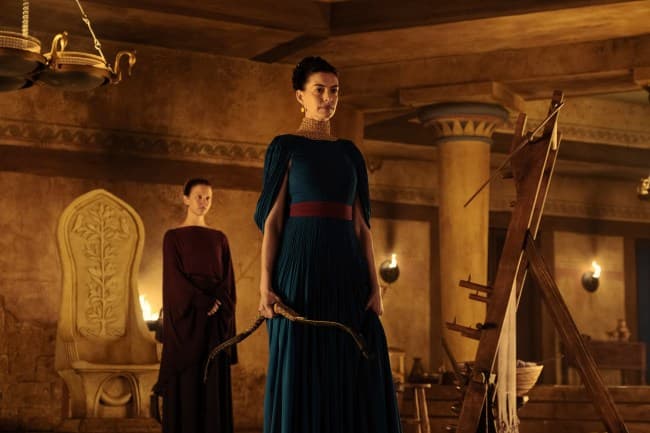
Ruth De Jong, a distinguished production designer, has spent two decades creating memorable cinematic worlds for directors like Paul Thomas Anderson and Christopher Nolan. Her primary goal is to craft authentic and vivid environments that serve the narrative and characters.
De Jong's journey began after Jack Fisk encouraged her to work on Paul Thomas Anderson's "There Will Be Blood" instead of attending art school. She further honed her skills on films such as "The Master" and "The Tree of Life" before taking on her first production design role for Kenneth Lonergan's "Manchester by the Sea."
For "Manchester by the Sea," De Jong immersed herself in the local fishing community, gaining access to homes and equipment to ensure authenticity. Her process involves breaking down scripts and attaching visual inspirations, ranging from art to textures.
Collaboration with directors is key, as seen when David Lynch provided his own artwork for inspiration on "Twin Peaks: The Return." De Jong also revisited original plans for iconic sets like the Red Room, acting as a conduit for the director's vision.
Her set for Jordan Peele's "Nope," the "Jupiter's Claim" theme park, achieved a rare feat by being preserved for the Universal Studios Hollywood tour. This accomplishment reflects the lasting impact of her meticulous set designs.
Following an Oscar nomination for Christopher Nolan's "Oppenheimer," De Jong re-teamed with Nolan for his adaptation of "The Odyssey." This project involved extensive global location scouting and imaginative set building, including Circe's cliffside home and an iconic Trojan Horse designed with meticulous historical detail.
De Jong embraces discomfort as a catalyst for artistic growth, believing that true progress lies in pushing boundaries. She emphasizes the importance of continuous momentum and artistic expression, likening directors like Nolan to artists who speak through their work.


