Home / Arts and Entertainment / Unicorn Mystery: Raphael's Shifting Masterpiece
Unicorn Mystery: Raphael's Shifting Masterpiece
9 Apr
Summary
- Raphael's painting hides layers of previous artworks.
- The woman's identity remains unknown, embodying shifting ideals.
- The work echoes Leonardo da Vinci's Mona Lisa composition.
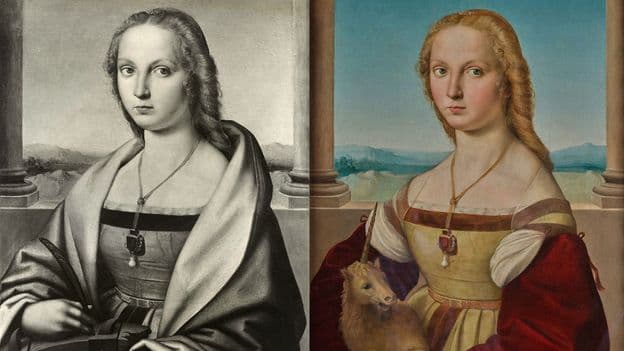
Raphael's "Portrait of a Young Woman with a Unicorn," painted between 1505 and 1506, holds hidden layers of imagery that have transformed its narrative over time. These concealed artworks offer insights into evolving concepts of ideal femininity across history. The sitter's identity remains unknown, with the portrait having been altered to represent various ideals, from marital fidelity to piety.
The composition features the woman in a three-quarter pose with folded hands, set against a landscape, reminiscent of Leonardo da Vinci's Mona Lisa. This resemblance, along with the painting's complex history of overpainting, makes "Portrait of a Young Woman with a Unicorn" a perpetually intriguing and dynamic masterpiece.


