
Home / Arts and Entertainment / India's Colosseum: Ancient Arena of Assam
India's Colosseum: Ancient Arena of Assam
24 May
Summary
- Rang Ghar, Asia's oldest amphitheater, was built in 1744 by Ahom king.
- A unique boat-shaped roof and organic mortar highlight indigenous engineering.
- Royalty watched contests and festivities from this historic viewing pavilion.
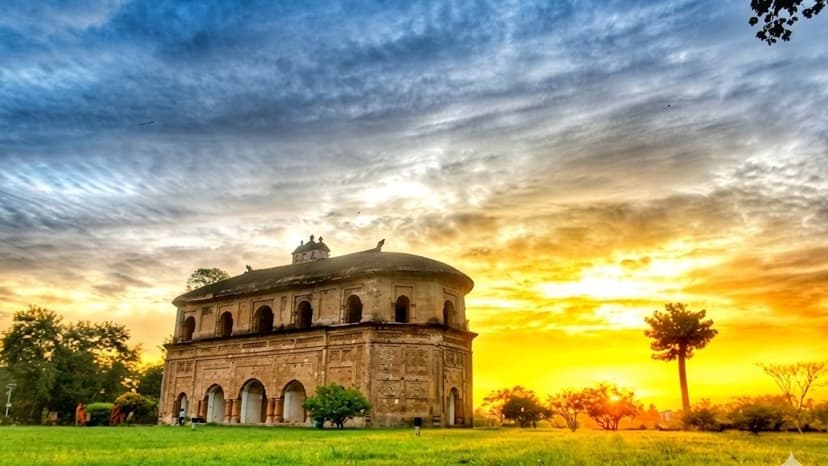
Asia's first amphitheatre, the Rang Ghar in Assam, India, stands as a silent monument with nearly 275 years of history. Built in 1744 by Ahom king Swargadeo Pramatta Singha, this two-storey pavilion is often referred to as the 'Colosseum of the East'.
Originally constructed from bamboo and wood in the late 17th century and later rebuilt in brick, Rang Ghar was designed for spectacle. It overlooked the Rupohi Pothar, where royal spectators watched wrestling bouts, buffalo fights, and Bihu celebrations. Its octagonal design features a distinctive roof resembling an inverted Ahom royal boat.
Remarkably, Rang Ghar was built without modern cement, using an organic mortar of sticky rice paste, duck eggs, and lime. This indigenous engineering stands in contrast to its functional similarity, not architectural scale, to Rome's Colosseum.
Though time has weathered its ornamentation, Rang Ghar remains a site for local rituals and celebrations. It also serves as an emblem of Assam's rich cultural heritage, located near other historical Ahom structures like Talatal Ghar.
