Home / Arts and Entertainment / Ramses II: Egypt's Great Pharaoh Returns to London
Ramses II: Egypt's Great Pharaoh Returns to London
2 Mar
Summary
- Ramses II's 3,000-year-old mummy reveals a preserved face of an ambitious ruler.
- An exhibition in London showcases treasures of Ramses II, including his coffin.
- Ramses II's self-aggrandizing monuments contrast with his legacy in Shelley's poem.
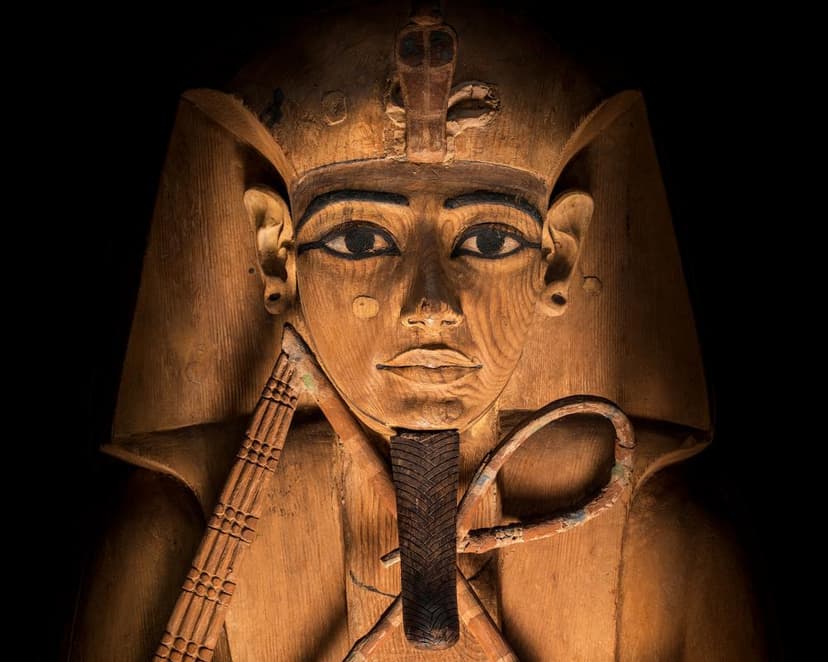
Ramses II, Egypt's ambitious pharaoh, whose mummy offers a remarkably preserved glimpse into his 3,000-year-old reign, is the subject of a new exhibition in London. This display at Battersea Power Station, titled "Ramses and the Pharaohs' Gold," brings treasures from the Egyptian Museum in Cairo to the UK, though his mummy will not be present.
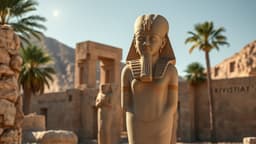
While Tutankhamun is more famous due to his intact tomb, Ramses the Great actively shaped ancient Egypt through wars, peace treaties, and monumental architecture. His self-commissioned statues at Abu Simbel and the Ramesseum exemplify his desire for eternal glory, commissioned by Ramses for temples honoring Ramses.
His reign (1279BC) saw a return to traditional religion and art after Akhenaten's rule, with Ramses depicted dwarfing his family and single-handedly winning the Battle of Kadesh. This battle, fought in modern-day Syria, led to a peace treaty with the Hittites against the rising Assyrians.
Ramses's legacy also includes potential connections to the Israelite exodus, depicting him as a tyrannical pharaoh. His fame was later cemented by Shelley's poem "Ozymandias," which satirizes immortal ambitions, using the Greek name for Ramses, who commissioned vast works and even ordered his name carved deeply.
Despite the poem's mockery of tyranny's decay, Ramses's influence is re-examined. His colossus in the British Museum, once targeted by Napoleon's army, was secured by Giovanni Battista Belzoni in 1817, later inspiring Romantic poets, including Shelley, to reflect on power and memory.