Home / Arts and Entertainment / Wheelchair Rave Shines Light on Arts Barriers
Wheelchair Rave Shines Light on Arts Barriers
26 Feb
Summary
- Artist uses a mobile rave to protest lack of audio descriptions.
- Cultural venues struggle with accessibility for disabled patrons.
- New arts and disability strategy aims to improve inclusion.
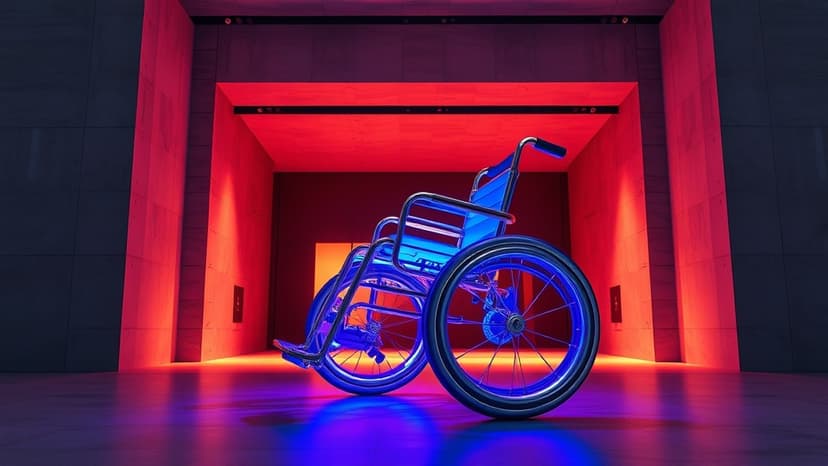
In Perth, artist Hugo Flavelle transforms protests into a mobile rave, 'Let Me In, Let Me Out.' This performance critically examines accessibility at cultural venues. Flavelle, who uses a wheelchair and has partial vision, directs chants and blasts electronic music while leading participants to four key institutions.
The work, running nightly, calls out specific barriers. At the Art Gallery of Western Australia, Flavelle highlights unreadable wall text and the absence of audio descriptions. He also notes difficulties at His Majesty's Theatre due to its heritage architecture, contrasting it with better access at the State Theatre Centre.
Flavelle's experience is shared by many; one in five Australians live with a disability, facing similar challenges. The WA Museum Boola Bardip's exhibits, for instance, fail to represent disabled individuals, leading to feelings of invisibility.
Advocates like David Doyle of DADAA emphasize the need for significant investment in accessible infrastructure. Morwenna Collett, an access consultant, points to outdated legislation as a contributing factor. However, a new national arts and disability strategy, including an accessibility code of practice, is expected to offer clearer guidance.
Perth Festival's artistic director, Anna Reece, commissioned the work, with all approached institutions agreeing to participate. These venues have collectively committed to engaging with access, choice, equity, and inclusion, acknowledging the performance as a "cheeky, but very genuine, provocation."
Flavelle found the experience nerve-wracking initially but ultimately rewarding. The positive audience reception to his words and music bolstered his confidence, signifying a step towards greater acceptance and integration within the arts community.