Home / Arts and Entertainment / Architect's Vision Crushed by Bureaucracy
Architect's Vision Crushed by Bureaucracy
9 Mar
Summary
- Danish architect's pure design for Paris's Grande Arche faced bureaucratic ego.
- The film details the architect's battles, compromises, and perceived betrayals.
- The story highlights the Gallic cult of the artist's supposed downbeat ending.
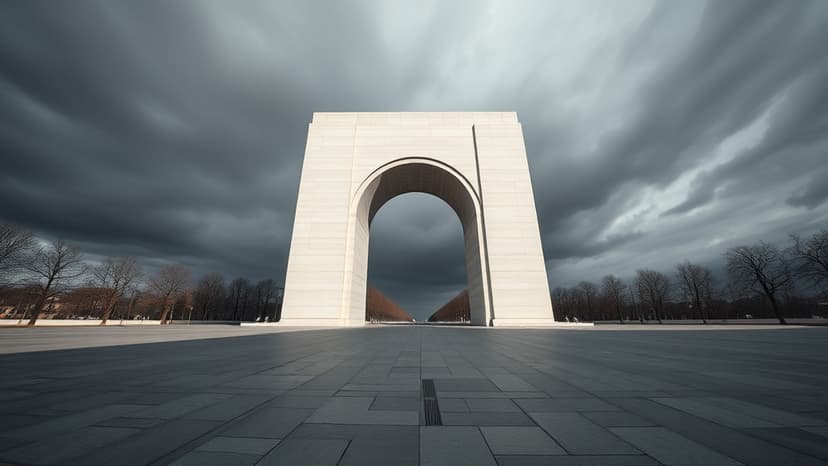
Stéphane Demoustier's drama, "The Great Arch," adapted from Laurence Cossé's novel, explores the tumultuous construction of Paris's Grande Arche. The film centers on Danish architect Johan Otto von Spreckelsen, portrayed by Claes Bang, whose pure design ideals were challenged by political and technical figures.
Summoned from Denmark, Von Spreckelsen refused to compromise on his "Cube" design, but quickly found himself navigating the demands of the premier and the cost-cutting measures of advisor Jean-Louis Subilon. He hired Paul Andreu as site manager, insisting on maintaining artistic control.
The film, shot in a 4:3 ratio, meticulously details the architect's struggles, including compromises on the facade and materials. Despite support from his wife, Liv, and even President Mitterrand, Von Spreckelsen succumbed to paranoia and rage.
While precise on the construction process, "The Great Arch" offers a less nuanced portrayal of the man, highlighting his intransigence without fully exploring emotional drivers. Bang's performance emphasizes disdain over fiery creativity, leading to a downbeat conclusion that critiques the Gallic artistic ideal.