Home / Arts and Entertainment / Nolan's Odyssey: Hero or Anti-Hero?
Nolan's Odyssey: Hero or Anti-Hero?
4 Aug
Summary
- Film reimagines Odysseus as self-doubting and passive, not pious.
- Greek gods are absent; Athena appears as a possible hallucination.
- Female characters are victims, not seductresses, and Helen is disfigured.
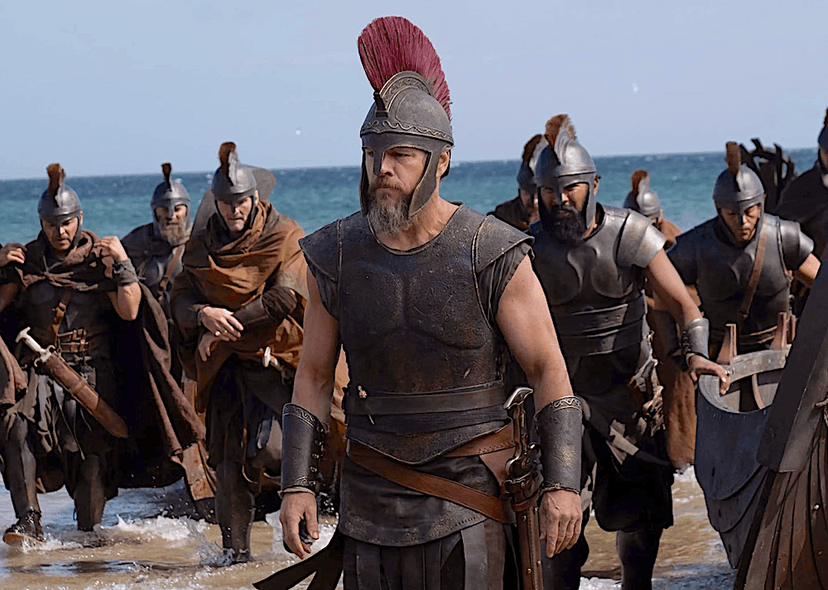
Christopher Nolan's "The Odyssey," starring Matt Damon, is a box office phenomenon, projected to earn over $1 billion. This epic reimagines Homer's classic hero, presenting a protagonist who is self-doubting, rational, and passive, a stark contrast to Homer's wise and authoritative figure.
Nolan's Odysseus is disillusioned by the horrors of Troy, suffering from PTSD and seeking solace in addiction, a departure from the original's longing for home. The film omits the Greek gods entirely, and Athena, appearing alongside Odysseus, is suggested to be a hallucination born of his guilt. Female characters like Calypso and Circe are depicted as victims, and Helen of Troy is presented as disfigured.
The adaptation further deviates by portraying Sinon, the deceiver from the Trojan Horse narrative, as himself deceived. In a significant thematic reversal, Nolan's Odysseus fails to assert authority, with his second-in-command making critical decisions. The climax also softens the original's harsh justice, with Odysseus sparing some suitors and ultimately renouncing his kingship.
This reinterpretation draws parallels to Apollonius of Rhodes's "Argonautica," where Jason is depicted as unheroic and reliant on women like Medea. Nolan's film, like Apollonius's work, explores a more modern, less overtly heroic figure, prompting discussions about the relevance of such anti-heroes in contemporary culture.


