Home / Arts and Entertainment / India's Maritime Past Reimagined: A Living History
India's Maritime Past Reimagined: A Living History
1 Jul
Summary
- New maritime complex in Lothal is one of the world's largest museum developments.
- Architecture mirrors advanced Harappan urban planning principles.
- Designed for water management, aiming for net-zero water and waste.
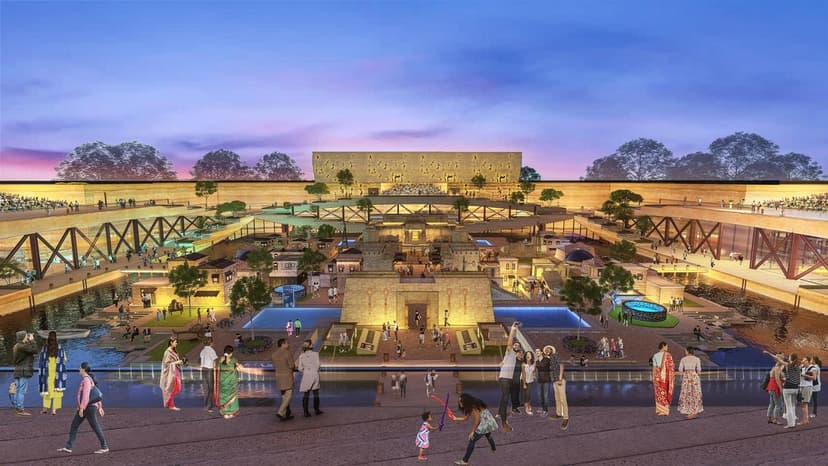
The National Maritime Heritage Complex (NMHC) in Lothal, Gujarat, is a pioneering development in India's museum landscape, moving towards interactive and inclusive designs. This expansive project, spanning nearly 400 acres, is recognized as one of the largest museum developments currently under construction in India and a significant global maritime museum endeavor.
Designed by Architect Hafeez Contractor, the NMHC aims to be a multi-day visitor experience, blending heritage, recreation, and education. Lothal, chosen for its historical significance as the site of the world's earliest known man-made dockyard and a key Indus Valley Civilisation location, forms the backdrop for this institution.
The architecture of the NMHC deeply engages with Harappan urban planning principles, featuring elevated plinths that reference ancient citadels built to withstand floods. The design creatively uses water as both an infrastructural and experiential element, reflecting the advanced planning and resilience of the Harappan settlements.
Phase I of the project includes a 14-gallery maritime museum, a recreated Lothal town, and public plazas, with future phases planned to include eco-resorts and amusement parks. The complex is designed with a strong focus on water management, incorporating a strategy to capture and recycle rainwater, aiming for a net-zero water campus.
Beyond its architectural merit, the NMHC is envisioned as a platform for experiential learning, encouraging public engagement with maritime history through immersive displays and storytelling. This approach seeks to showcase the sophistication and global connectivity of the Indus Valley Civilisation, moving away from static historical exhibits.


