Home / Arts and Entertainment / Moroccan Horse Ritual: Director Captures Mythic Masculinity
Moroccan Horse Ritual: Director Captures Mythic Masculinity
27 Nov • 2 reads
Summary
- Filmmaker Tala Hadid spent over four years documenting Moroccan equestrian ritual.
- The documentary explores the Tbourida, a tradition rooted in warfare and horsemanship.
- Hadid intentionally blurred lines between fact and fiction in her filmmaking approach.
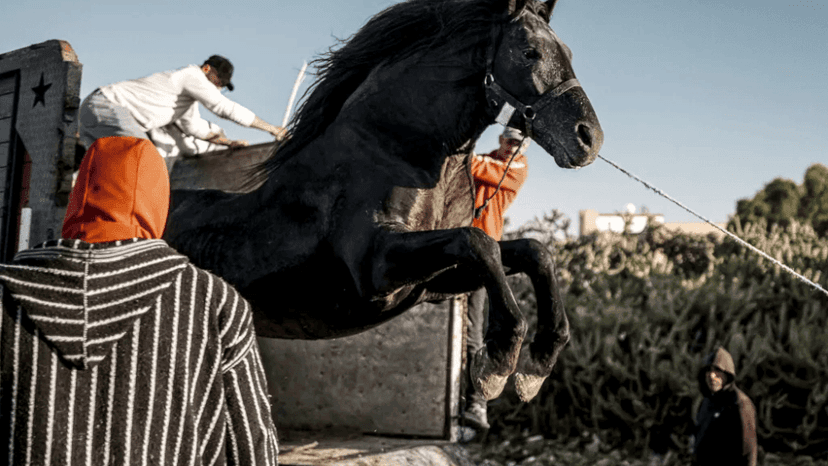
Director Tala Hadid spent more than four years deeply embedded in Moroccan communities for her documentary "Bardi." The film meticulously captures the centuries-old Tbourida, an equestrian ritual with origins in warfare where horsemen charge and fire rifles in unison.
"Bardi" follows a brotherhood of riders, observing their families and the profound connection between young men and their horses. Hadid's photography background informed her intimate filmmaking style, keeping her crew small and agile over the extended filming period.
Hadid stated she aimed not for a sociological or journalistic piece, but to understand the ritual and its cultural significance to Morocco. As someone of Moroccan heritage, she sought humility to learn about the mythology and beliefs within this horse-riding community.
The documentary explores the "porous border" between reality and performance in filmmaking. Hadid acknowledges that individuals alter their behavior when a camera is present, viewing this as a natural part of the documentary encounter and a form of playful exploration.
She intentionally introduced fabricated or recreated elements around three years into filming. Hadid posits that no image is purely real once edited, emphasizing a fluid boundary between documentary and fiction. She sees filmmaking as a creative act, akin to fictioning, where subjects and filmmakers mutually construct narratives.


