Home / Arts and Entertainment / Monk's Discovery Unlocks Millennium of History
Monk's Discovery Unlocks Millennium of History
18 May
Summary
- A hidden chamber in Dunhuang contained nearly 50,000 ancient documents.
- Texts were found in multiple languages, showcasing Dunhuang's multicultural past.
- The discovery poses preservation challenges due to changing environmental conditions.
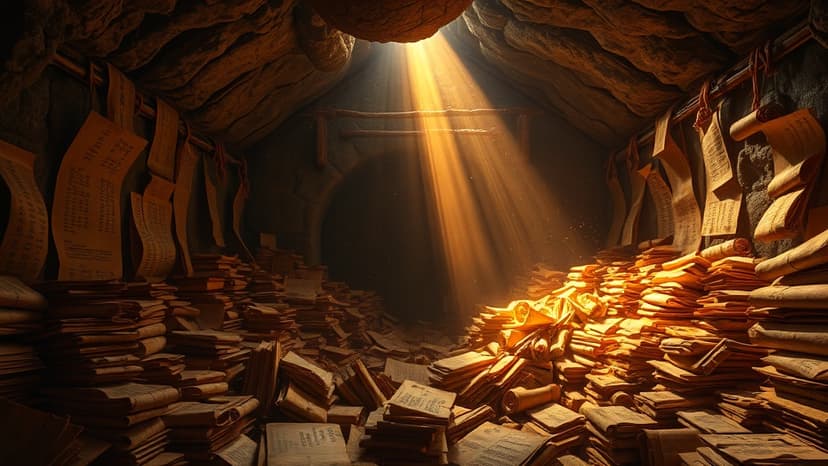
In the summer of 1900, Wang Yuanlu, a custodian at the Mogao Grottoes in Dunhuang, China, uncovered a hidden chamber. While clearing sand, he found a walled-off room, designated Cave 17 or the Library Cave, packed with ancient documents and artifacts. This discovery provided a trove of historical information about the Silk Road and medieval trade.
The Library Cave yielded nearly 50,000 documents, silk banners, and fabrics. Manuscripts in Chinese, Tibetan, Sanskrit, Sogdian, and Khotanese languages revealed Dunhuang's role as a multicultural center for merchants, pilgrims, and scholars from diverse continents.
However, opening the cave created significant preservation issues. The delicate microenvironment of the grottoes is highly sensitive to changes in humidity and external air, accelerating the degradation of murals and artifacts. International explorers acquired many of the documents, dispersing them globally.
Today, the Mogao Grottoes are a protected heritage site. Scientists are actively working to manage public tourism while implementing strict climate control measures to prevent further deterioration of these ancient rock-cut temples.


