Home / Arts and Entertainment / Mixed Reality Play Blurs Lines Between Actor and Audience
Mixed Reality Play Blurs Lines Between Actor and Audience
21 Jan
Summary
- New play uses mixed reality to place actors virtually before the audience.
- Ian McKellen and other stars appear as digital specters.
- The experience aims to foster connection, distinguishing itself from VR.
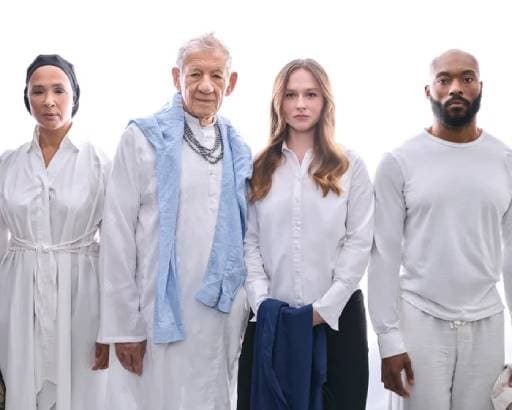
The Shed in Manhattan is hosting 'An Ark,' an experimental play integrating mixed reality technology. This new theater experience features renowned actors, including Ian McKellen, Golda Rosheuvel, Arinzé Kene, and Rosie Sheehy, appearing as digital projections. Through enhanced glasses, the audience engages directly with these volumetric captures, which are overlaid onto the physical space.
Producer Todd Eckert emphasizes that this mixed reality approach differs significantly from virtual reality. The technology allows viewers to see each other and the room, fostering a sense of connection central to the play's narrative. This contrasts with VR's "elective isolation," aiming to enhance human interaction rather than replace it.
Developed by Simon Stephens and directed by Sarah Frankcom, 'An Ark' was filmed using 52 cameras in Grenoble, France. The production pushes the boundaries of volumetric capture, presenting four actors simultaneously for the first time. The play explores themes of mortality and human connection, conceived in 2020 amidst pressing global concerns.
Director Sarah Frankcom found artistic freedom within the technological constraints, treating the volumetric filming process like a standard play rehearsal. The result is a unique theatrical encounter where actors maintain steady eye contact, creating a direct and personal relationship with each audience member. This intimacy offers a novel form of live theater.
While acknowledging technical limitations like hazy projections, Eckert prioritizes the connective potential over hyper-realism. He believes the shared experience fosters hope and strengthens human bonds. The play's creators see this as a foundational step in a new theatrical alphabet, potentially making intimate performances more accessible and preserving actors' work.