Home / Arts and Entertainment / Matisse's Late Art: Color, Scissors, and Genius
Matisse's Late Art: Color, Scissors, and Genius
20 Mar
Summary
- Matisse reinvented modern art in his 70s after surgery.
- His late work features bold cutouts and simplified lines.
- The Grand Palais exhibition celebrates his final decade.
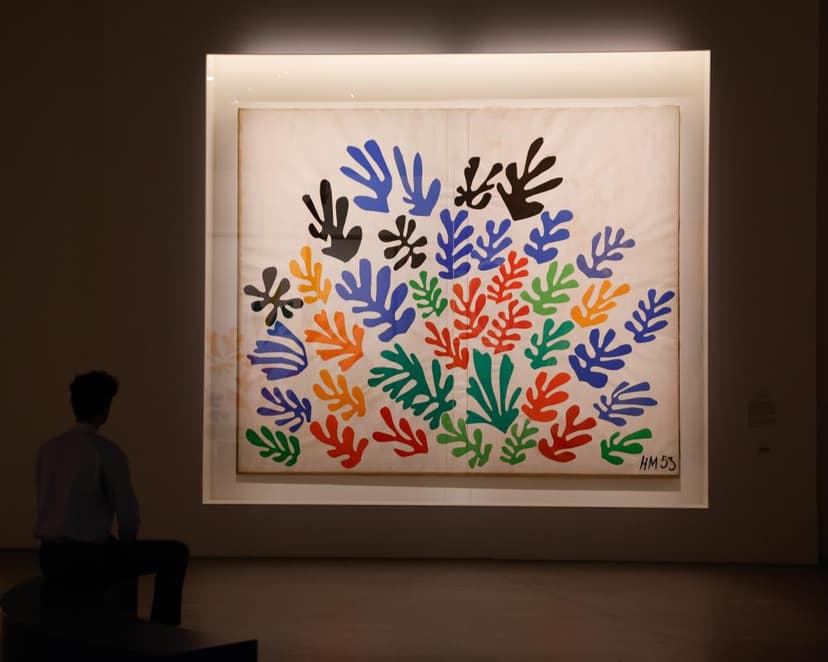
Henri Matisse experienced a profound artistic rebirth in his 70s, even after surviving surgery in the early 1940s. Despite physical limitations, he reshaped modern art, demonstrating that one's best creative period can occur later in life. The Grand Palais in Paris presents a major exhibition exploring Matisse's final years, from his 1941 surgery to his death in 1954.
Initially, Matisse's work from his Nice studio featured intricate still lifes, painted under the shadow of war and family arrests. Repetitive studies and a renewed focus on drawing led to his 'Themes and Variations' series, simplifying images to their essence. This period also saw him embrace scissors, leading to the vibrant, graphic compositions characteristic of his late style.
The exhibition highlights his 'Jazz' book, a bold exploration of color using cutouts, and his Vence chapel designs, featuring plant motifs and stained glass. These works showcase his radical shift towards graphic boldness and decorative art, creating immersive sensory experiences through color and form.
Matisse's later works, including the famous blue nudes and a final self-portrait, exemplify his mastery. A single ink-on-yellow-paper portrait, using only seven lines, powerfully encapsulates his genius and refined vision at age 80, proving his most impactful art emerged in his final years.