Home / Arts and Entertainment / Author's Bold Leap: From Bestseller to Director at 64
Author's Bold Leap: From Bestseller to Director at 64
21 Sep
Summary
- Maha Harada, 64, makes feature directorial debut with adapted short story.
- Film explores father-daughter relationship and societal value measurement.
- Harada draws visual inspiration from tea ceremonies and Mark Rothko.
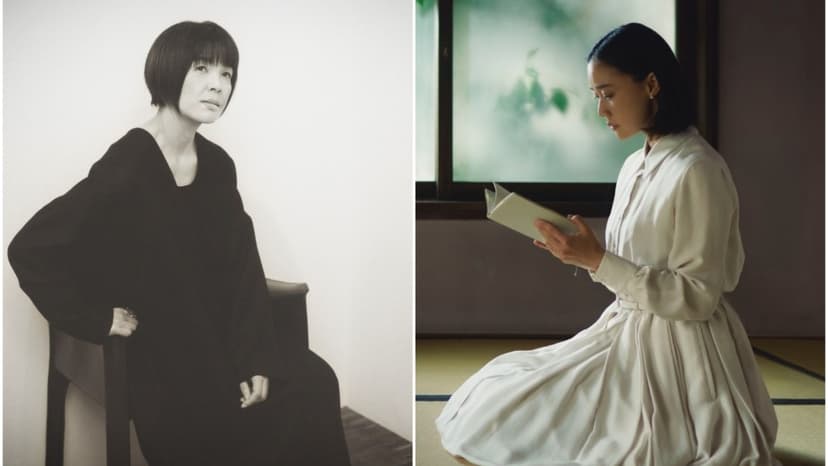
Maha Harada, a best-selling Japanese author with two decades of writing experience, has transitioned to filmmaking at the age of 64. Her feature directorial debut, "In My Father's Room," is an adaptation of her short story "An Unnecessary Man." The film has already secured distribution deals in France, Korea, Taiwan, and Hong Kong ahead of its screenings.
Harada views her shift to directing as a continuation of her writing process, which she likens to framing scenes through a camera. The story, set in a town she knows intimately, focuses on the relationship between an art museum worker and her deceased father, a character inspired by Harada's own unconventional father.
The film centrally examines the idea that personal worth is not solely determined by societal utility. Harada posits that a life dedicated to self-valued pursuits can still lead to happiness, regardless of conventional success metrics. This theme is embodied by the father character, whose life choices were guided by his own passions.
Visually, "In My Father's Room" is anchored by the symbolism of the Japanese tea ceremony and the abstract expressionism of Mark Rothko's paintings. Harada aimed to blend the quiet symbolism of chanoyu with the spiritual quality found in Rothko's work, seeing them as counterparts in conveying beauty.
Transitioning to directing involved relinquishing some authorial control, a process Harada found eye-opening. She consciously reduced dialogue and stage direction to allow collaborators creative interpretation. Performances by Yu Aoi as the daughter and Issey Ogata as the father, particularly Ogata's portrayal of the tea ceremony, are highlighted as key strengths.
Harada also sees her directorial debut at 64 as a statement against age-based limitations, encouraging others to pursue their passions regardless of age. She plans to continue both writing novels and directing films, embracing the challenge of dual creative paths.


