Home / Arts and Entertainment / Lost Medieval Town Found: Clues to Sudden Decline Emerge
Lost Medieval Town Found: Clues to Sudden Decline Emerge
15 Mar
Summary
- A lost medieval town named Stolzenberg was discovered in Poland.
- The town's collapse is estimated to have occurred in the 14th or 15th century.
- Artifacts found include coins, belt elements, and cannon grenade fragments.
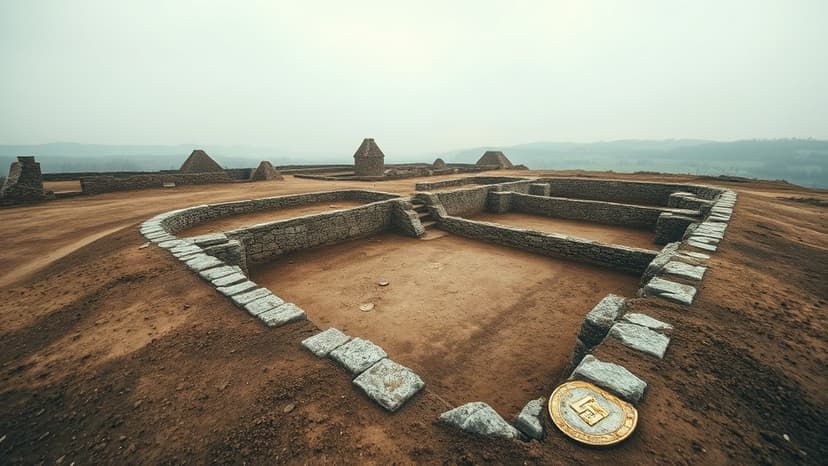
Archaeologists have unearthed the remains of Stolzenberg, a lost medieval town situated in a forest near Sławoborze, Poland. The town, located on a historically contested border region, appears to have experienced a sudden decline between the 14th and 15th centuries.
Initial searches in the modern village were unsuccessful, but subsequent exploration in the forest revealed substantial earthen ramparts and an 18-foot-deep moat. A geophysical survey confirmed the site, detecting magnetic anomalies indicative of building foundations arranged around a central market square, typical of towns founded under German law.
The site yielded over 400 artifacts, ranging from the Bronze Age to World War II. Significant finds include medieval silver coins, belt elements, and coat clasps, along with fragments of cannon grenades and lead rifle bullets linked to the 1761 Seven Years' War battle in the area.
Experts are investigating multiple factors for Stolzenberg's abandonment, such as relocation due to environmental concerns or shifting trade routes. The discovery of undeveloped urban plots suggests the town may have fallen at an early stage.
Future research aims to locate the town hall and church and conduct bioarchaeological analyses to understand the inhabitants' diets and health. The Relicta Foundation views the site as a time capsule, crucial for understanding settlement processes in Europe.