Home / Arts and Entertainment / Banville: "A disaster" Irish uprising enabled fanatics.
Banville: "A disaster" Irish uprising enabled fanatics.
6 Mar
Summary
- Banville calls the 1916 Irish uprising a disaster.
- He admits to not being a good father, dividing time between two women.
- His thrillers are more likely found in bookshops than literary works.
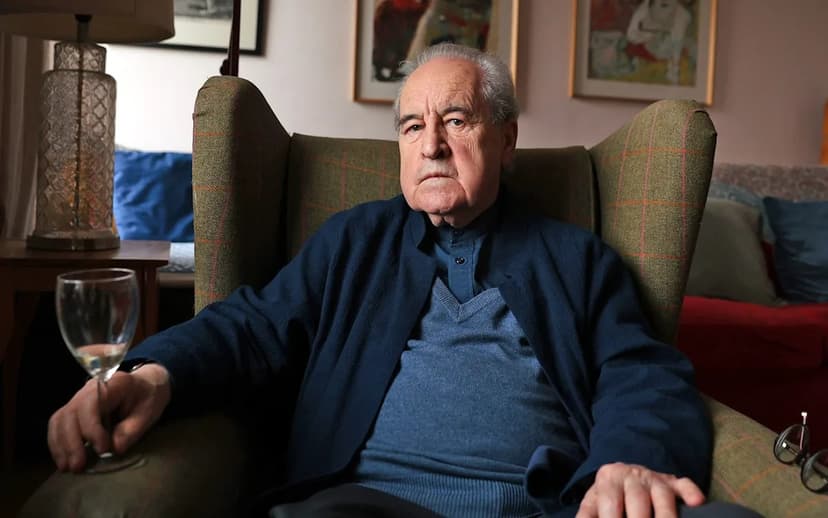
John Banville, widely considered Ireland's foremost living writer, shared unvarnished opinions on his homeland and personal life. He characterized the 1916 Irish uprising as a "disaster" that facilitated the rise of "fanatics." Banville also reflected on his personal relationships, confessing to not being a "good father" and having spent four decades navigating life with two women. Although known for his literary novels, his crime thrillers, initially published under a pseudonym, are now more frequently encountered by readers than his celebrated works.
Born in 1945, Banville eschewed university for world travel afforded by his Aer Lingus job before becoming a sub-editor and later a literary editor. He looked back on his early ambition to be an "international novelist of ideas," finding humor in his youthful solemnity. Now 80, he acknowledges a playful shift in his writing, embracing the "dark comedy" of aging. He continues to write despite reduced capacity, viewing each new book as a potential masterpiece.
Banville expressed a continued skepticism towards Irish nationalism, rejecting the notion of mandatory national allegiance. His critique of Ireland extended to the Catholic Church's past influence, which he likened to communist regimes, noting with surprise the swift decline of its power. He also recalled the 2015 same-sex marriage referendum with astonishment, seeing it as a sign of a rapidly changing Ireland, though he noted the nation's swift recovery from ideological collapse.
Reflecting on his dedication to art, Banville admitted to the ruthlessness of the artist, citing a past comment about exchanging children for a good paragraph. He acknowledged the understanding of those close to him regarding his "project" to create art. His complex personal life involved loving two women, his late wife Janet Dunham and Patricia Quinn, a situation he described with a mix of regret and gratitude for his four children and their relationships.