Home / Arts and Entertainment / Jetavanaramaya: The Monument Earth Almost Forgot
Jetavanaramaya: The Monument Earth Almost Forgot
4 Feb
Summary
- Jetavanaramaya stupa, built in early 4th century CE, was once world's third-largest man-made building.
- This immense brick structure could build a wall from London to Edinburgh.
- Once a hub of Buddhist thought, it's now largely unknown outside Sri Lanka.
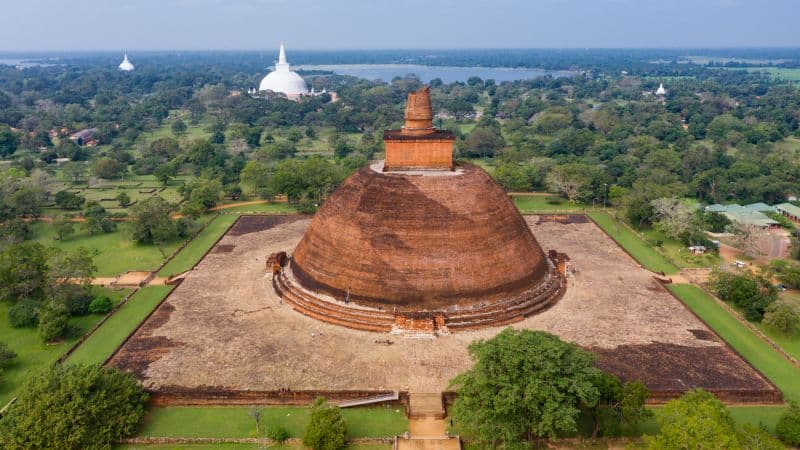
Anuradhapura, Sri Lanka's first capital, remains a sacred Buddhist city where ancient devotion is palpable. Among its wonders is the Jetavanaramaya stupa, a marvel of ancient engineering completed in the early fourth century CE. At that time, it was the third-largest man-made structure globally, surpassed only by the Pyramids of Giza.
Built using approximately 93.3 million baked mud bricks, the stupa originally stood around 122 meters (400 feet) tall. Its vast volume, even after centuries of decay and restoration to its current 71 meters (233 feet), is staggering. It's estimated its bricks could form a wall stretching from London to Edinburgh.
Despite its monumental achievement, Jetavanaramaya is little known internationally. Over time, jungle growth and shifting religious focus led to its decline, burying much of its history. This vast monastic complex, designed for hundreds of monks, was built on land contentious with the orthodox Buddhist establishment, later associated with the Sagalika sect.
The construction itself posed immense challenges, requiring the precise preparation and placement of millions of bricks. Historical accounts suggest a combination of voluntary labor, captive workers from India, and potentially animals like elephants and bullock carts were used. The structure's design showcased sophisticated engineering, including features possibly indicating an early understanding of ventilation.
Significant discoveries, such as gold panels inscribed with Mahayana Buddhist texts and imagery, hint at Jetavanaramaya's role as a cosmopolitan center connected to India. Though its spire may have once been crowned with a diamond, and decorative motifs like the Naga cobra were present, much about its original construction remains a mystery.
While the nearby Ruwanwelisaya stupa is more prominent in modern Sri Lankan religious life, Jetavanaramaya stands as a unique testament to an ancient society's organizational prowess and engineering skill. It represents the last truly gigantic stupa, influencing later architectural styles in Southeast Asia, though none matched its colossal scale.