Home / Arts and Entertainment / Hokusai's Wave: Beauty and Apocalypse
Hokusai's Wave: Beauty and Apocalypse
16 Mar
Summary
- Woodblock prints captured fleeting pleasures and hidden despair.
- European art influenced Japanese masters like Hokusai and Hiroshige.
- Hokusai's Great Wave is an apocalyptic vision of change.
Japanese woodblock prints from the 17th to 20th centuries, known as "pictures of the floating world," offered affordable art depicting popular culture. Initially showcasing actors and beautiful women, these prints illuminated dreams and desires, with some pieces exhibiting surprising eroticism and transgressive elements.
The exhibition highlights the underlying darkness beneath the glamour, such as young girls apprenticing in the sex trade. This duality, where hedonism meets despair, is exemplified by Hiroshige's poignant portrait of a solitary geisha, embodying "mono no aware" – the bittersweet awareness of impermanence.
A significant shift occurred with mid-19th century landscape prints by masters Hokusai and Hiroshige. Influenced by European perspective from Dutch traders, Hokusai's "Thirty-Six Views of Mount Fuji" combined depth with striking graphics. Hiroshige's "Fifty-three Stations of the Tōkaidō Road" blended Western and Asian styles, creating hallucinatory vistas that captivated impressionists.
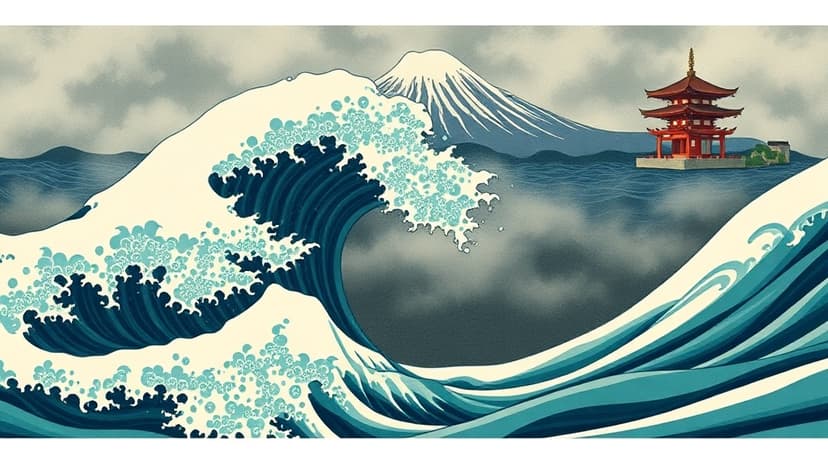
Hokusai's "Great Wave" is presented not just as a famous image but as a terrifying vision of Japan's isolation ending and great change approaching. It contrasts with Hiroshige's harmonious depiction of Mount Fuji, illustrating their distinct styles and the emergent genius that transformed prints into vehicles for expanding consciousness.