Home / Arts and Entertainment / Ghanaian schoolgirls' pageant dreams turn cutthroat
Ghanaian schoolgirls' pageant dreams turn cutthroat
29 Sep
Summary
- The play explores colorism and beauty standards in 1986 Ghana.
- Actors Denée Benton and Jasmine Amy Rogers bring star power.
- It critiques societal pressures on young women's appearance.
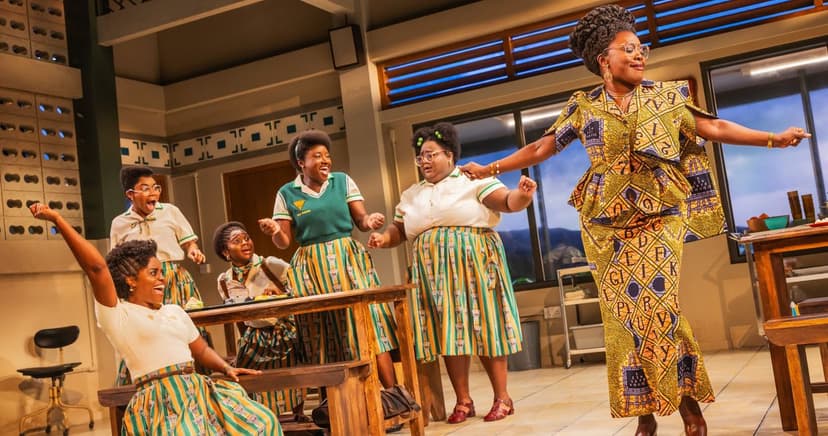
Jocelyn Bioh's "School Girls; Or, the African Mean Girls Play" is a sharp satire examining beauty standards and ambition within the context of a 1986 Ghanaian boarding school. The students of Aburi Girls Boarding School are obsessed with the Miss Ghana pageant, a potential gateway to international fame and fortune.
The play's brilliance lies in its examination of colorism and superficial criteria that dictate female worth. The arrival of a new student intensifies the competition, exposing the cruelties and grief embedded in a world that judges women on youth, thinness, and proximity to whiteness. This Broadway production, directed by Whitney White, amplifies the play's incisiveness and emotional weight.
Featuring notable performances from Denée Benton and Jasmine Amy Rogers, the production leverages the actresses' existing public resonance to underscore the drama's themes. The narrative draws inspiration from the story of a Minneapolis-born model who won Miss Universe Ghana in 2011, highlighting how pageant rules have been bent to favor lighter skin tones.
"School Girls" delves into the psychological toll of these pressures, particularly on its central character, Paulina. The play masterfully portrays her internal conflict and the self-hatred that drives her ambition, making her a complex figure of both victim and victimizer. The production's sensitive direction ensures Paulina's vulnerability shines through her vindictiveness.
Ultimately, the play is not a tragedy but a poignant exploration of the antiheroine and the world that shapes her. It prompts reflection on whether it is too late for characters like Paulina to escape the damaging societal expectations they have internalized. The play continues to resonate with its incisive commentary on the pressures faced by young women.


