

Home / Arts and Entertainment / Vikash Nowlakha: Painting with Light & Shadow
Vikash Nowlakha: Painting with Light & Shadow
8 Apr
Summary
- Cinematography prioritized feeling over conventional beauty.
- A six-acre set in Bangkok meticulously recreated Lyari.
- Real lighting and practical effects enhanced visual authenticity.
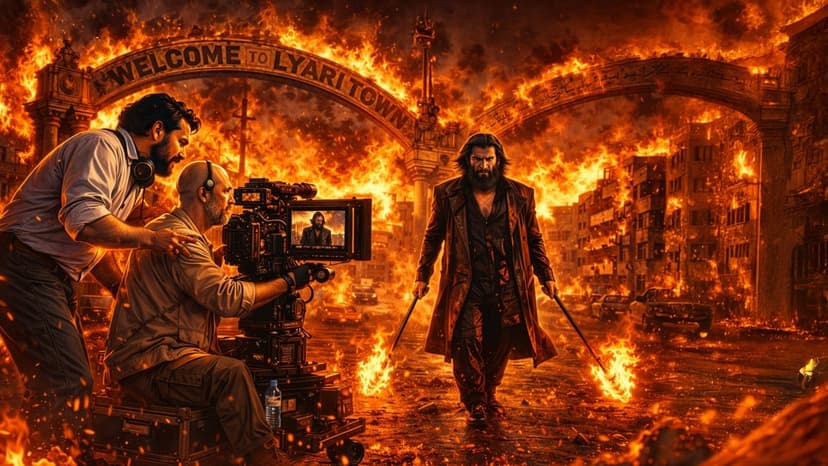
Cinematographer Vikash Nowlakha crafted Dhurandhar's distinctive visual style by prioritizing emotional impact over conventional beauty, a philosophy aligned with legendary Roger Deakins' views.
The film's foundation lies in its practical approach to world-building. A sprawling six-acre set in Bangkok meticulously recreated Lyari, complete with aged textures and historical detail, astonishing audiences with its realism.
Beyond Bangkok, diverse real locations like Amritsar and Ladakh contributed to the film's rich texture. Action sequences were predominantly practical, with actors performing up to 95% of stunts, and real explosions adding visceral authenticity.
Nowlakha harnessed real light interacting with these environments, actively embracing shadow and contrast to create depth and emotional resonance, a stark contrast to the flatness often seen in VFX-heavy films.
The visual language evolves with the narrative, using light and color grading as storytelling tools. Hamza's transformation is mirrored by shifts in tone, with darker frames indicating ambiguity and brighter scenes signaling emotional exposure.
This deliberate visual grammar extends to scene construction, utilizing framing and camera movement to convey character and tension. Intimate close-ups and contrasting framings amplify emotional pressure and narrative insights.
Nowlakha joined the production late but became deeply invested, living the film for its 15-month duration across challenging locations. His commitment ensured that the visual intent remained paramount.
Dhurandhar's cinematography proved load-bearing, with its visual integrity being noticeable when the film was released on Netflix with altered visuals. The cinematography was not background but integral to the story's soul.
