Home / Arts and Entertainment / Un-Fair-Ground: Where Art Challenges Exclusion
Un-Fair-Ground: Where Art Challenges Exclusion
16 Feb
Summary
- Artist Delaine Le Bas uses 'no' as an affirmation of joy and protection.
- The exhibition incorporates 20 artworks from the Whitworth's collection.
- It explores themes of connection, exclusion, and cultural identity.
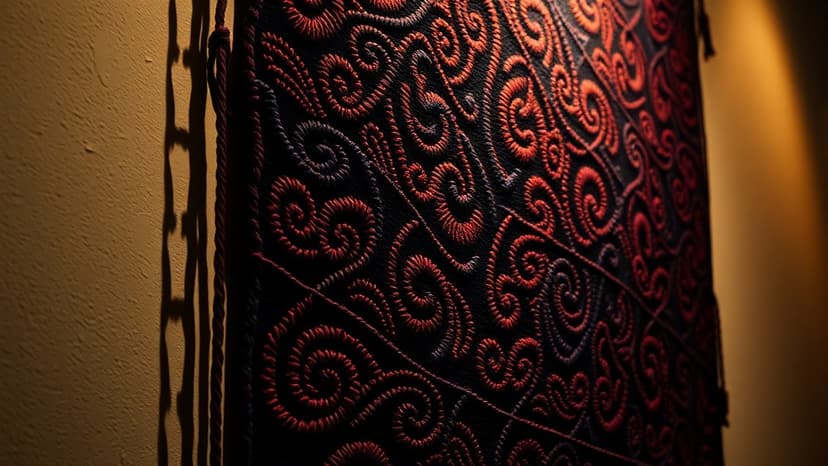
Delaine Le Bas's exhibition, Un-Fair-Ground, at The Whitworth is a vibrant exploration of connection and exclusion. Le Bas, a Romany artist, transforms the gallery into a series of immersive rooms, using her Glastonbury mural as a starting point. The exhibition prominently features the word "no," reinterpreted not as a barrier, but as an affirmation of joy and self-protection, set against a backdrop of pink, blue, and yellow.
The exhibition, which includes 20 pieces from The Whitworth's collection, delves into themes of land, art ownership, and identity, drawing from Le Bas's Romany heritage. Her installation "Witch House" expands on her previous work, creating an inviting space adorned with Serbian shoes and custom wallpaper that blends personal photos with political statements and art reproductions.
Le Bas's unique approach disrupts traditional art hierarchies. Works from the collection, by artists like William Blake and Joan Miró, appear to tear through her custom wallpaper, fostering unexpected connections. Other installations, such as "L'Archipel en Feu" and "Delainia: 17071965 Unfolding," use fabric and mirrors to create kaleidoscopic displays of fragmented human narratives.
The final gallery space shifts to a more muted tone, featuring works by Ana Maria Pacheco and Madge Gill. Presentation on fabric lends a sense of temporality. While Pacheco's figures are sinister, Le Bas's own pieces in this room adopt a monochrome palette, with fabric hands reaching out, evoking a spectral presence.
The exhibition's namesake mural, "Un-Fair-Ground," originally displayed at Glastonbury, visually merges fairground elements with diverse iconography. It ultimately frames the concept of 'ground' not as fair or unfair, but as a space for connection and defiant welcome.