Home / Arts and Entertainment / David Hockney: Pioneer of Queer Art
David Hockney: Pioneer of Queer Art
13 Jun
Summary
- Hockney's 1961 painting depicted a same-sex couple, challenging norms.
- His art celebrated gay relationships before homosexuality was legal.
- California paintings normalized queer domesticity and sensuality.
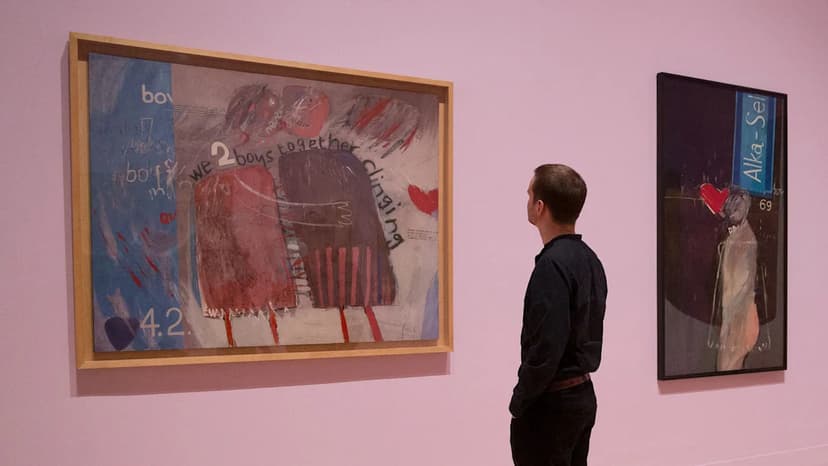
David Hockney, a pivotal figure in British and LGBT+ culture, began his career with works that challenged social taboos. His 1961 painting, "We Two Boys Together Clinging," depicted a same-sex embrace, a bold statement when being gay was illegal in the UK. This early period saw Hockney unashamedly celebrating queer lives and desire through art, offering a stark contrast to media portrayals that often relied on parody or isolation.
Following his move to California in 1964, Hockney's style evolved, leading to his iconic swimming pool paintings. Works like "Peter Getting Out of Nick's Pool" (1966) and "Domestic Scene, Los Angeles" (1963) showcased the sensuality, joy, and everyday domesticity of gay relationships. Art commentators emphasize that these paintings were not just aesthetic achievements but also acts of protest, normalizing same-sex relationships at a time when they were largely invisible or stigmatized.
Hockney's art consistently pushed boundaries, from his early depictions of gay love to later explorations of nature and technology. His work, always described as radical and bold, celebrated life and beauty, often with a critical edge. This enduring spirit of curiosity and color, evident from his early student days to his final works, cemented his legacy as an artist who continuously reinvented and challenged artistic conventions.


