Home / Arts and Entertainment / Ancient City's Treasures Risked by Middle East Conflict
Ancient City's Treasures Risked by Middle East Conflict
26 Aug
Summary
- Exhibition of Byblos artifacts highlights Middle East conflict's threat to heritage.
- Conflict repeatedly delayed the display of Lebanon's ancient treasures.
- Archaeologists race to preserve heritage amidst ongoing regional warfare.
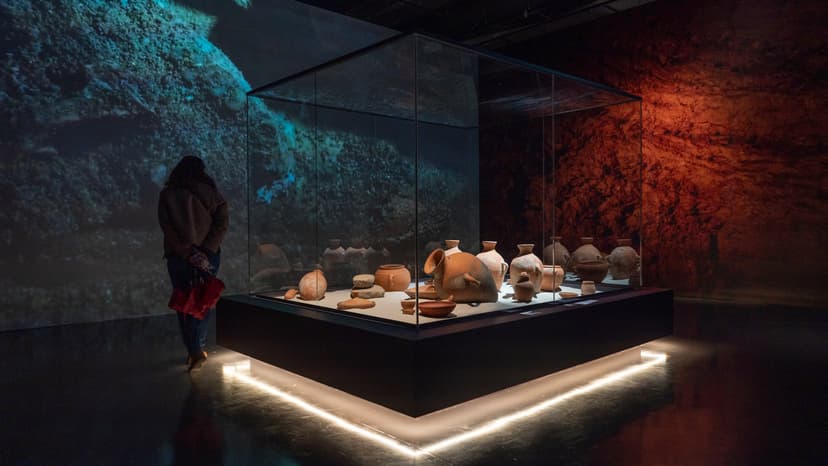
Artifacts from Byblos, one of the world's oldest continuously occupied cities, were recently exhibited in Paris, drawing attention to the threat modern conflict poses to the Middle East's cultural heritage. The exhibition, a collaboration between Paris's Arab World Institute and Lebanon's Ministry of Culture, faced significant delays. In fall 2024, escalating conflict between Israel and Hezbollah led to postponement due to fears of the transport convoy becoming a target. This followed earlier Israeli bombing campaigns in 2024 that damaged several of Lebanon's heritage sites.
Further conflict arose in February of this year when Israel and the United States initiated actions against Iran, prompting Hezbollah to retaliate against Israel. This resulted in renewed Israeli bombing of Lebanon. Despite the risks, the culture ministry was reluctant to delay the exhibition a second time. However, curators decided to withhold six of the most valuable objects, including an obelisk, deeming them irreplaceable if damaged. The artifacts' journey to Paris was made under the escort of the Lebanese Army and a private security firm.
The exhibition emphasizes Byblos's historical role as a crossroads of culture, enriched by successive civilizations including Persians, Greeks, Romans, and various Muslim caliphates. Displays feature ancient anchors, iron fish hooks, and miniature anchors dedicated to gods, reflecting the Phoenicians' reliance on the sea. Miniature anchors symbolize prayers for sailors' safe journeys.
Later, Byblos's trade expanded, with its cedar wood highly sought after for shipbuilding and sacred structures, particularly by Egypt. In exchange, Byblos merchants received gold, lapis lazuli, and papyrus, which they then traded across the Mediterranean. Byblos is noted as an exceptional site, encapsulating vast human history within a relatively small area.
Among the exhibition's 370 objects are intricately worked dagger sheaths, golden breastplates with elaborate carvings, and depictions of Egyptian pharaohs. A mosaic from late imperial Rome portrays the abduction of the Phoenician princess Europa. While Byblos itself has largely escaped recent destruction due to its location north of Beirut and away from major conflict zones, other UNESCO-designated sites like Baalbek and Tyre suffered damage in 2024 and this year. The National Museum in Beirut has moved some treasures to safer, underground storage due to bombing risks.
Archaeologists stress the difficulty of protecting sites like Byblos and restoring damaged ones amidst ongoing hostilities. They emphasize that the preservation of Lebanon's and the world's history, exemplified by Byblos, is a critical global responsibility. The message is clear: if this destruction can happen here, it can happen anywhere, underscoring the urgent need for protection of cultural heritage worldwide.


