Home / Arts and Entertainment / Björk's Homogenic: Warrior Queen Meets Cyborg
Björk's Homogenic: Warrior Queen Meets Cyborg
29 Aug
Summary
- Homogenic combined electronic beats with melancholic strings.
- Björk's Homogenic cover art blended ancient and futuristic elements.
- The album showcased Björk's focused yet contradictory artistic vision.
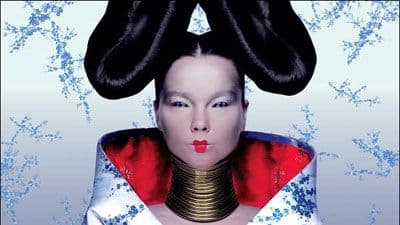
Released in 1997, Björk's album Homogenic embraced a striking duality, juxtaposing a desire for a life lived fully with a severe, elegant aesthetic.
The album's iconic cover art, a collaboration between Alexander McQueen and Nick Knight, depicted Björk with an air of ancient royalty and futuristic technology. Her image combined elements of Japanese design and tribal adornments, creating a powerful visual of near-perfect symmetry.
Homogenic's sound diverged from the playful nature of her earlier albums, Debut and Post. It featured hard-hitting electronic percussion alongside emotive string arrangements, highlighting a refined artistic direction.
This marked a significant point in Björk's solo career, which began after her international success with the Sugarcubes. Her 1993 debut, assisted by producer Nellee Hooper, explored UK electronic music trends, earning critical praise and commercial success.


