Home / Arts and Entertainment / Seven-Hooded Serpent Idol Unearthed in Lakkundi Excavation
Seven-Hooded Serpent Idol Unearthed in Lakkundi Excavation
24 Jan
Summary
- A rare seven-hooded Adishesha idol was found during excavation.
- The site yielded inscriptions, sculptures, and decorative stone fragments.
- Artifacts are believed to date from Kalyana Chalukya to Badami Chalukya eras.
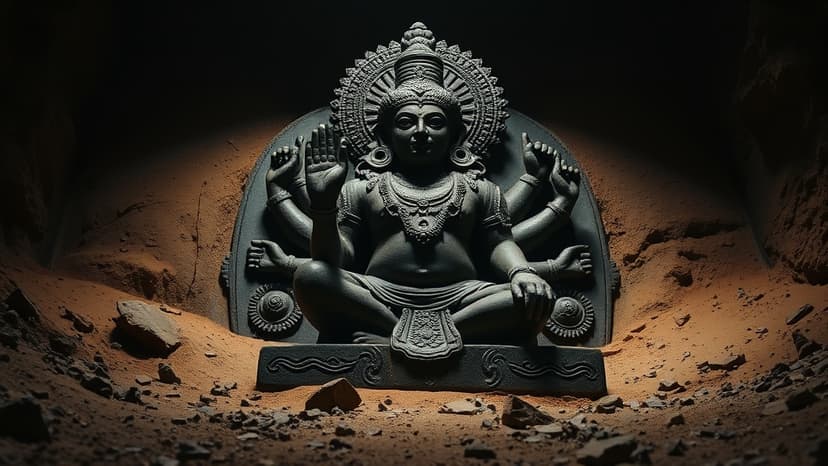
A rare and intricately carved idol of Adishesha, featuring seven hoods, has been discovered during excavations at the historic village of Lakkundi in Gadag district. This significant find was made approximately 200 meters from the main excavation site. Alongside the Adishesha idol, archaeologists have unearthed several other important artifacts. These include stone inscriptions, a donor slab, Dwarapalaka sculptures, and various decorative stone fragments.
Experts are attributing these sculptures to the Kalyana Chalukya, Hoysala, and Badami Chalukya periods, with an estimated 12th-century dating for the donor inscription. The ongoing excavation, which began recently, has seen daily discoveries, including human skeletal remains, fueling immense excitement among historians and archaeologists. The area has a history of yielding serpent-related carvings, making the Adishesha idol a particularly resonant discovery.
Further finds within a historic well at the site include beautifully carved stone idols and reliefs, potentially depicting deities like Saraswati or Lakshmi, alongside Kirtimukha motifs and Dwarapalaka figures. Even structures like a pump set appear to be built using ancient sculpted stones. Researchers suggest an ancient stone pathway to the Veerabhadreshwara Temple may pass through the excavation site.