Home / Arts and Entertainment / AI Revolutionizes African Filmmaking, Democratizing Hollywood Tech
AI Revolutionizes African Filmmaking, Democratizing Hollywood Tech
9 Feb
Summary
- AI offers African filmmakers access to advanced visual effects previously exclusive to major studios.
- Artificial intelligence is leveling the playing field for African creatives facing funding challenges.
- African artists are actively refining AI models to ensure authentic cultural representation.
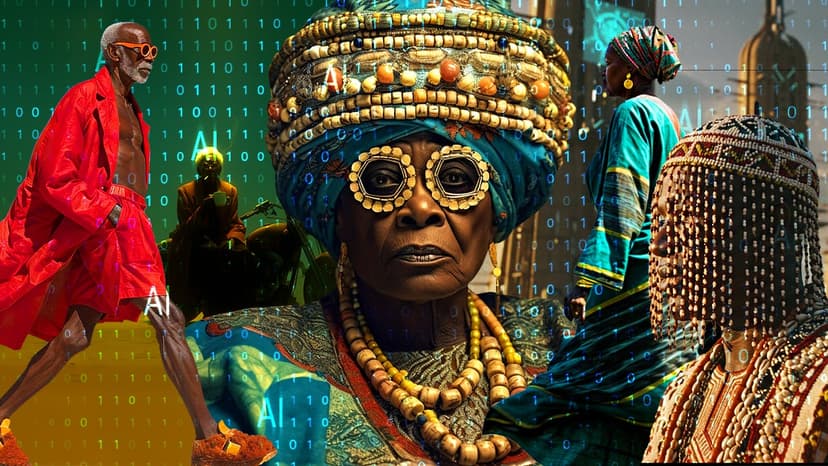
African filmmakers and artists are increasingly leveraging artificial intelligence (AI) to access sophisticated production resources, previously confined to major Hollywood studios. This technological advancement is democratizing filmmaking across the continent, enabling creators to overcome significant challenges like funding and infrastructure limitations.
Senegalese director Hussein Dembel Sow exemplifies this trend, using AI for his short film "Rose," which features complex visual effects that would have been prohibitively expensive without it. His earlier AI-generated video commemorating the Thiaroye massacre gained widespread attention, positioning him as a leading voice in AI's application in African media.
While Hollywood grapples with AI's potential impact on jobs, African creatives see it as a tool for innovation and storytelling. Alexandre Michelin, creator of the Knowledge Immersive Forum, notes that AI opens doors to previously unfeasible content. However, challenges persist, including biases in AI models developed elsewhere and the cost of access, particularly for those needing U.S. dollars.
Efforts are underway to ensure AI representation is authentically African. Malik Afegbua is developing an AI model trained on African cultural data to combat stereotypes and capture nuanced regional differences. This push for cultural specificity is crucial for creatives seeking to tell their own stories accurately.
Community building is also vital. The Naija Artificial Intelligence Film Festival, launched in September, has fostered a community of AI-focused African creatives, facilitating idea exchange and opportunities. Despite ongoing costs, initiatives like AiStudio.ng are making AI tools more accessible using local currency, empowering a new generation of storytellers.
As AI technology rapidly improves, African creatives aspire to produce Hollywood-caliber blockbusters from their home continent. Hussein believes that within a decade, African films may rival American productions, offering authentic narratives free from common stereotypes, truly embodying the future of African storytelling at the intersection of art and technology.