Home / Arts and Entertainment / Adapting 'Train Dreams': Challenges Met
Adapting 'Train Dreams': Challenges Met
17 Feb
Summary
- Filmmakers restructured the narrative by moving a wildfire event.
- Narration was crucial to capture the book's unique voice.
- Elvis cameo and dog-shot story were omitted due to budget and narrative fit.

The adaptation of Denis Johnson's novella "Train Dreams" involved significant creative choices to translate its unique narrative style to the screen. Directors Clint Bentley and Greg Kwedar meticulously worked to preserve the book's essence while crafting a filmable structure. They strategically moved a pivotal wildfire event from page 40 of the book to the middle of the film, dividing the narrative into distinct halves.
This structural change allowed the first half to focus on the protagonist's efforts to build a life, while the second half explored his profound grief and recovery. Recognizing the novella's contemplative and fluid nature, the filmmakers incorporated narration to convey Johnson's distinctive voice and the lead character's internal world. This approach helped bridge gaps where visual storytelling alone was insufficient.
Several memorable elements from the book, including a brief appearance by Elvis Presley and a surreal anecdote about a man shot by his dog, were ultimately excluded. These omissions were made due to budget constraints for the Elvis cameo and narrative flow concerns for the dog incident, ensuring the film remained focused on its core emotional journey. The character of Claire Thompson, a widow in the book, was reimagined as a forest ranger to enhance her role and explore ecological themes.
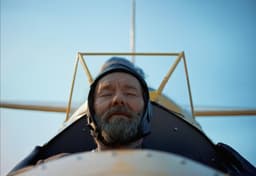
The film's conclusion also diverged from the novella. While the book ends with a 'wolf boy' sighting, the movie opts for an earlier scene depicting the protagonist's reflective airplane ride. This decision, along with the reimagined Claire Thompson, highlights the filmmakers' commitment to adapting the spirit of the book while allowing the cinematic version to stand independently.