Home / Weather / Yukon's Winter Shatters Records: Coldest & Wettest Ever
Yukon's Winter Shatters Records: Coldest & Wettest Ever
6 Mar
Summary
- Whitehorse recorded its wettest winter with over 2.5 times the average precipitation.
- The city experienced its 24th coldest winter, averaging 3.6°C below normal.
- Concerns rise over potential spring flooding due to a larger snowpack this year.
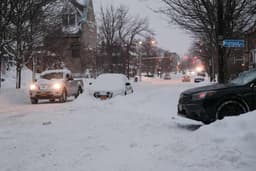
Whitehorse experienced its wettest winter on record from December 1, 2025, to February 28, 2026, with precipitation levels more than two-and-a-half times the seasonal average. The Whitehorse airport recorded 139.8 millimetres of precipitation, far exceeding the typical 52.1 millimetres for this period.
This past winter also ranked as the 24th coldest in Whitehorse since record-keeping began in 1941. The average temperature was -16.9°C, which is 3.6°C colder than the usual -13.3°C. An unusually persistent ridge of Arctic high pressure contributed to the prolonged cold.
Across the Yukon, many communities recorded record low minimum temperatures on individual days. Faro, in particular, broke 13 low minimum temperature records in December, including a -45.6°C reading on December 11. Dawson and Watson Lake also experienced their second wettest winters on record.
Concerns are mounting regarding the significant snowpack, with 77 centimetres of snow recorded in Whitehorse by February 28, 2026, compared to 49 centimetres the previous year. This substantial snow accumulation raises fears of potential property damage from rapid melting and flooding during the spring thaw.