

Home / Weather / Hurricane Scale Flawed: Wind Speed Isn't Enough
Hurricane Scale Flawed: Wind Speed Isn't Enough
20 Apr
Summary
- The Saffir-Simpson scale rates hurricanes by wind speed only.
- It ignores deadly factors like storm surge and rainfall.
- Experts propose new scales incorporating multiple hazards.
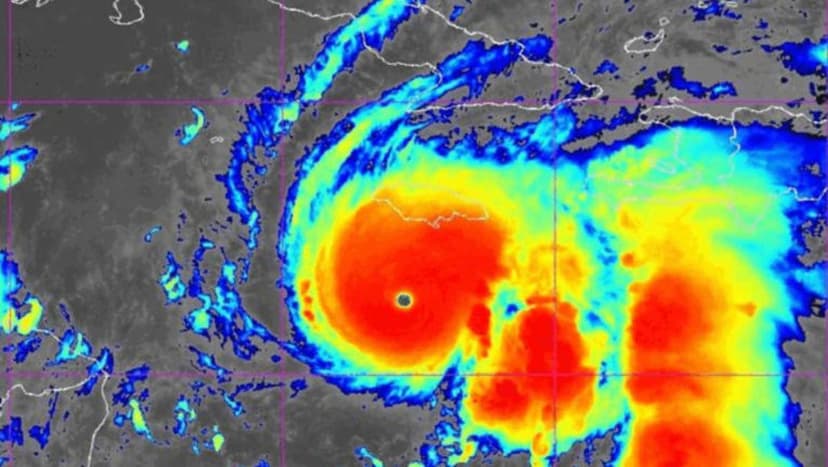
The Saffir-Simpson Hurricane Wind Scale, a widely recognized system for rating hurricanes based on wind speed, faces increasing scrutiny for its limitations. This scale, which ranges from category 1 to 5, only accounts for wind intensity and does not include other life-threatening hazards.
Forecasters at the National Hurricane Center are working to de-emphasize the scale, focusing instead on the specific impacts of individual storms, such as wind, storm surge, and heavy rain. These other factors are crucial, as wind speed alone accounts for only about 8% of hurricane fatalities, while rainfall contributes to 27% of deaths.
Developed in the late 1960s and early 1970s, the scale has been a staple for public warnings. However, its sole focus on wind speed can be misleading, as a lower-category storm hitting a populated area can cause more devastation than a higher-category storm striking an unpopulated region.
Experts suggest a multi-scale approach is needed, with separate ratings for wind, storm surge, and rainfall. An alternative proposal, the 'Tropical Cyclone Severity Scale,' aims to integrate these multiple hazards. Other studies indicate that barometric pressure might be a more accurate overall intensity metric than wind speed, as it correlates better with damage and combines storm size and wind intensity.
