
Home / Weather / El Niño Looms: Strongest in Decades?
El Niño Looms: Strongest in Decades?
5 May
Summary
- A strong El Niño pattern may form this year.
- Global warming intensifies El Niño's impacts.
- El Niño influences weather worldwide.
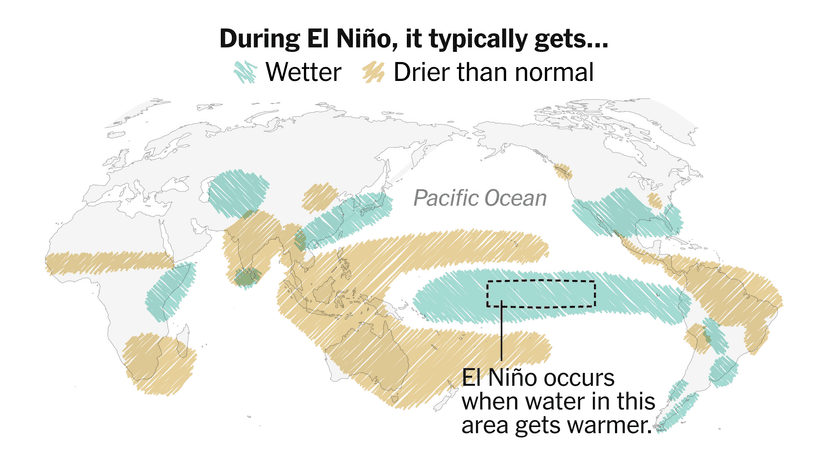
A potent El Niño weather pattern is anticipated to develop later this year, with a significant chance of becoming one of the strongest observed in three decades. This phenomenon, characterized by shifting Pacific winds and ocean heat release, is projected to influence global weather, potentially leading to increased rainfall, droughts, and wildfires. Forecasters indicate a roughly 60 percent probability of El Niño forming between May and July, a key factor suggesting next year could surpass 2024 as the warmest on record.
El Niño's effects are deeply intertwined with regional climates. In South America, historical strong El Niños have caused severe floods in Brazil and droughts in Colombia. While the most recent El Niño in 2023-24 was not as strong as some predecessors, its impacts were catastrophic in some areas, like record-low river levels in the Amazon and devastating floods in southern Brazil. Scientists attribute the intensified impacts to human-induced warming, which exacerbates droughts and heavy rainfall.
North America typically experiences wetter southern regions and warmer, drier northern areas during El Niño. However, unusual warmth in the Indian and Atlantic Oceans in 2023-24 partially offset El Niño's effects in North America. Globally, El Niño can bring heat and dryness to Asia, often followed by severe flooding. In Africa, it typically leads to drought in some regions and floods in others, with warming exacerbating extreme wet and dry conditions.
Despite uncertainties, El Niño remains a vital signal for future weather predictions, assisting farmers, disaster agencies, and insurance companies in planning seasons ahead. The interplay between El Niño, La Niña, and Earth's overall warming suggests that sharp climate swings may become more frequent, presenting ongoing challenges for global climate management.
