
Home / Weather / Hurricane Season Looms: Prepare for the Unexpected
Hurricane Season Looms: Prepare for the Unexpected
4 May
Summary
- Hurricane Preparedness Week highlights dangers beyond wind, including surge and flooding.
- Florida has experienced more hurricanes than any other state historically.
- Even inland areas can face severe impacts from extreme rain and storm surge.
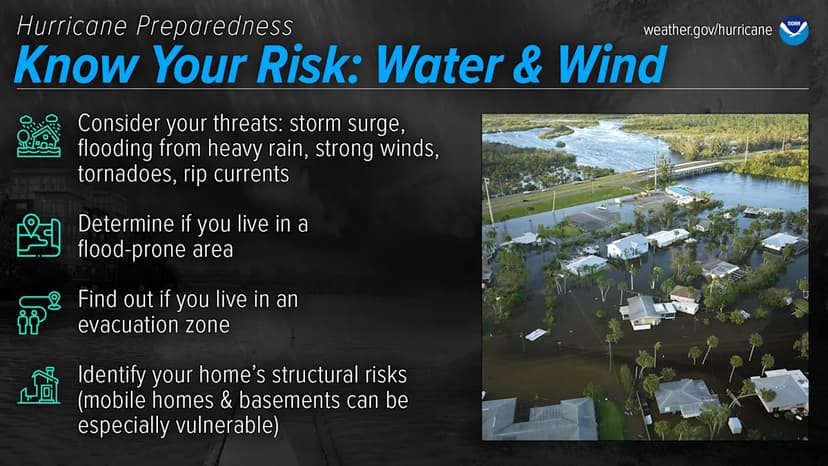
As the 2026 Atlantic hurricane season approaches, beginning June 1, Hurricane Preparedness Week (May 3-9, 2026) serves as a crucial reminder to prepare for potential storms. Despite initial predictions for a below-normal season, Florida's history of being the most frequently hit state underscores the importance of readiness. Forecasters emphasize that hurricane impacts are not confined to coastal areas; wind and water can cause significant damage hundreds of miles inland.
The primary hazards associated with tropical cyclones include destructive winds, storm surge flooding, inland flooding from heavy rainfall, tornadoes, and dangerous surf conditions. Storm surge, a leading cause of fatalities, pushes water toward the shore, inundating coastal areas and impacting inland waterways. Heavy rainfall can also lead to severe flooding, creating hazardous conditions and hindering evacuations.
Hurricane-force winds can inflict moderate to catastrophic damage, while tornadoes can form within storm bands. Additionally, rough surf and deadly rip currents can occur far from the storm's center. Residents are advised to identify their flood and evacuation zones, assess their home's structural integrity, and understand that even areas not typically prone to flooding can experience inundation from extreme rainfall. Mobile homes are particularly vulnerable to high winds.
