Home / War and Conflict / WWII Vet Identified Decades Later by Old Photo
WWII Vet Identified Decades Later by Old Photo
27 Feb
Summary
- World War II veteran's remains identified using an old photograph.
- Newer forensic techniques failed to identify the fallen soldier.
- The identification process took over 70 years to complete.
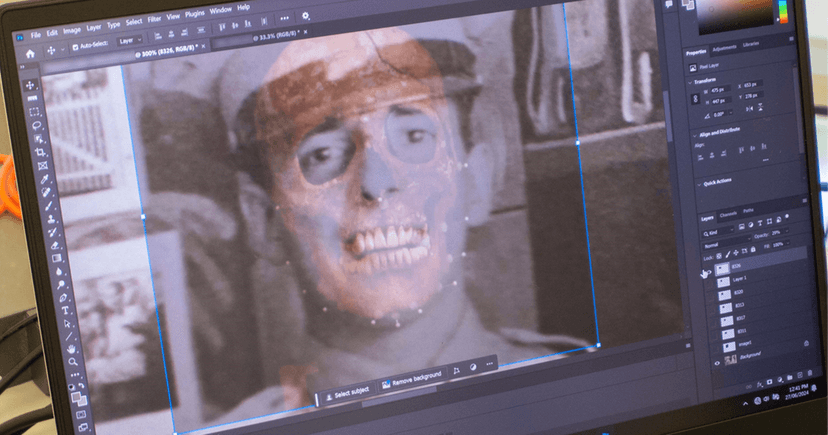
The remains of U.S. Army Sgt. Roger Duquesne, missing in action since the Korean War, have been identified decades later using an old photograph. Sgt. Duquesne disappeared in September 1950 while serving near Masan, South Korea, and was declared dead in 1953. His remains, recovered near the Naktong River, were buried as unknown in Hawaii in 1956 and disinterred in 2011 for identification. Initial attempts using modern forensic techniques, such as DNA analysis and dental records, proved unsuccessful.
Facing a dead end with contemporary methods, investigators turned to craniofacial superimposition, an older forensic technique. By comparing a photograph of Sgt. Duquesne with the recovered skull, and using advances in video technology, experts were able to achieve a match. A distinctive shadow cast by his upper canine tooth in the photograph, visible when the skull was positioned correctly, provided compelling evidence. This case highlights how refined older forensic methods can bring closure to long-unresolved identifications.