
Home / War and Conflict / WWII Canteen Connects U.S. and Japan in Peace
WWII Canteen Connects U.S. and Japan in Peace
23 May
Summary
- A WWII canteen, blackened by fire, symbolizes lost lives.
- A Japanese man preserved the relic and built memorials.
- Annual ceremonies promote peace and unity between nations.
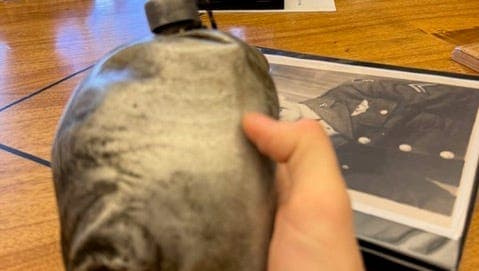
A canteen, blackened by fire from a World War II bomber crash, now serves as a poignant symbol of remembrance. Discovered decades after the collision of two U.S. war planes during a bombing raid on Japan in 1945, the relic honors the American crews and Japanese citizens who perished.
One of those lost was Stark County's Cpl. John William "Bill" Cameron, a 19-year-old waist gunner. His sacrifice, along with that of 22 other servicemen, is commemorated annually through events in Japan and at Pearl Harbor.
Fukumatsu Itoh, a Japanese Buddhist, discovered the crash site and, despite condemnation, preserved the canteen and built memorials. He dedicated himself to ensuring no one was forgotten, holding annual services and pouring bourbon from the canteen onto the memorials to honor all lives lost.
His successor, Dr. Hiroya Sugano, continued this tradition, establishing ceremonies at the crash site and a second one at Pearl Harbor. These events, attended by Japanese and American military personnel and family members, now focus on promoting peace and unity between the two nations. The pouring of bourbon from the canteen symbolizes a toast to peace and a unified future.
