feedzop-word-mark-logo
searchLogin
Feedzop
homeFor YouIndiaIndia
You
bookmarksYour BookmarkshashtagYour Topics
Trending
Terms of UsePrivacy PolicyAboutJobsPartner With Us

© 2026 Advergame Technologies Pvt. Ltd. ("ATPL"). Gamezop ® & Quizzop ® are registered trademarks of ATPL.

Gamezop is a plug-and-play gaming platform that any app or website can integrate to bring casual gaming for its users. Gamezop also operates Quizzop, a quizzing platform, that digital products can add as a trivia section.

Over 5,000 products from more than 70 countries have integrated Gamezop and Quizzop. These include Amazon, Samsung Internet, Snap, Tata Play, AccuWeather, Paytm, Gulf News, and Branch.

Games and trivia increase user engagement significantly within all kinds of apps and websites, besides opening a new stream of advertising revenue. Gamezop and Quizzop take 30 minutes to integrate and can be used for free: both by the products integrating them and end users

Increase ad revenue and engagement on your app / website with games, quizzes, astrology, and cricket content. Visit: business.gamezop.com

Property Code: 5571

Home / War and Conflict / China's Missile Threat: US Faces Land War Gap

China's Missile Threat: US Faces Land War Gap

15 Dec, 2025

•

Summary

  • China's missile force threatens Western Pacific bases.
  • US faces a near-term shortage of long-range munitions.
  • Alliances are a key US advantage in the Pacific.
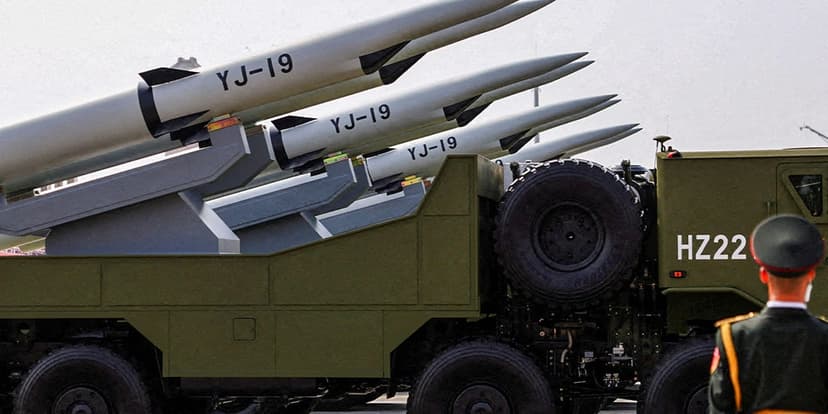
China's Missile Threat: US Faces Land War Gap

China's People's Liberation Army Rocket Force has developed a vast arsenal of short, medium, and long-range missiles, designed to keep U.S. forces at bay. This land-based firepower, supported by underground facilities and mobile launchers, aims to neutralize key airfields and ports across the Western Pacific, a strategic workaround for China's perceived air superiority limitations.

The United States is rapidly expanding its own long-range missile production and refining its targeting and survivability capabilities, which currently surpass China's. Despite China's numerical advantage in missiles, the U.S. benefits from a sophisticated global surveillance network and decades of combat-tested joint operations. Alliances with countries like Japan and Australia also provide crucial depth and basing options not available to China.

While China's missile strategy focuses on overwhelming U.S. bases early in a conflict, the U.S. employs layered air defenses and stealthy submarine-launched missiles. The competition is increasingly defined by factors like basing access, command integration, and the ability to sustain fire, where U.S. alliances and technological advantages offer a significant edge in the Pacific's critical land domain.

trending

Jupiter brightest in 2026

trending

Man City overwhelms Exeter 10-1

trending

Booker dunks over Anunoby

trending

DMart Q3 profit jumps

trending

Harmanpreet Kaur stars in WPL

trending

Barcelona focuses on Real Madrid

trending

Du Plessis, James Vince shine

trending

Everton beat Sunderland in FA

trending

Sam Harper stars in BBL

Disclaimer: This story has been auto-aggregated and auto-summarised by a computer program. This story has not been edited or created by the Feedzop team.
The PLA Rocket Force aims to deter U.S. intervention by possessing a large number of missiles capable of striking U.S. bases and military installations in the Western Pacific.
Analysts suggest the U.S. currently faces a near-term challenge with missile stockpiles and would need to expand production significantly for a prolonged conflict.
Alliances with countries like Japan and Australia provide the U.S. with crucial basing, intelligence sharing, and logistical support, expanding its operational reach.

Read more news on

War and Conflictside-arrowAustraliaside-arrowUnited Stateside-arrowChinaside-arrow

You may also like

Asia Stocks Poised for Higher Open on Inflation Watch

1 day ago • 9 reads

article image

Vietnam Seeks Russian Nuclear Talks, Eyes New Partners After Japan Exit

8 Jan • 8 reads

article image

US may seize Russian oil tanker near Europe

7 Jan • 109 reads

article image

Climate Disasters Cost $120bn: UN Urged to Act

27 Dec, 2025 • 125 reads

article image

World Population Peak: Decline Ahead?

25 Nov, 2025 • 276 reads

article image