
Home / War and Conflict / UK Army's Tech Wishlist: Startups Fund Innovation
UK Army's Tech Wishlist: Startups Fund Innovation
6 May
Summary
- British Army partners with tech firms, some covering costs.
- Modernization efforts lag due to unfunded defense investment plan.
- Companies subsidize army trials, hoping for future contracts.
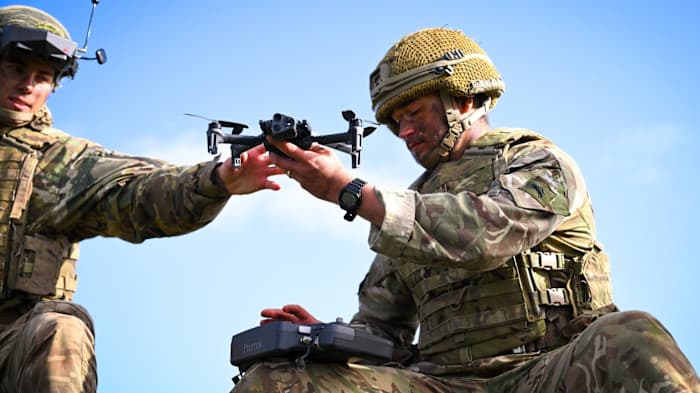
The British Army is leaning heavily on collaborations with technology firms, a strategy where some participating companies report subsidizing the cost of equipment for the military. These "mission partnerships" enable the army to test emerging technologies such as drones, artificial intelligence, and advanced communication systems, inspired by their effectiveness in Ukraine.
However, the Ministry of Defence faces significant funding shortfalls. This financial constraint prevents the commitment to larger contracts that smaller tech companies require to offset their substantial research and development expenses. Many startups express frustration privately, feeling their innovation budgets are being utilized by the army without adequate compensation.
Modernization plans are hampered by a lack of funds, exacerbated by ongoing government deliberations over a 10-year defense investment plan. This plan is crucial for outlining the funding for the strategic defense review, the most extensive military overhaul in decades, now expected by summer.
These exercises, such as one held at Copehill Down, offer startups a platform to showcase their capabilities. While the army's objective is testing and learning, with commercial outcomes not being the primary goal, companies hope these demonstrations will lead to future defense contracts. Yet, the absence of firm commitments could force some innovative startups out of business, potentially deterring future industry participation.
The British Army's inventory of drones, for instance, significantly lags behind Russia's, highlighting the urgent need for technological advancement. To address this, the army is engaging with companies like Anduril for autonomous drone technology, which dramatically reduces training time. Nevertheless, the overall modernization remains underfunded, with an estimated gap of tens of billions of pounds.
